The honest size guide
Mini Bichon Frise: what the label really means
A mini Bichon Frise is claimed at 1.5 to 3kg, while the breed standard is 5.4 to 8.2kg. So the label describes a dog bred below range, not a smaller breed, and a normal placement is $3,500 to $6,000 all-in. Here is what the premium actually buys.
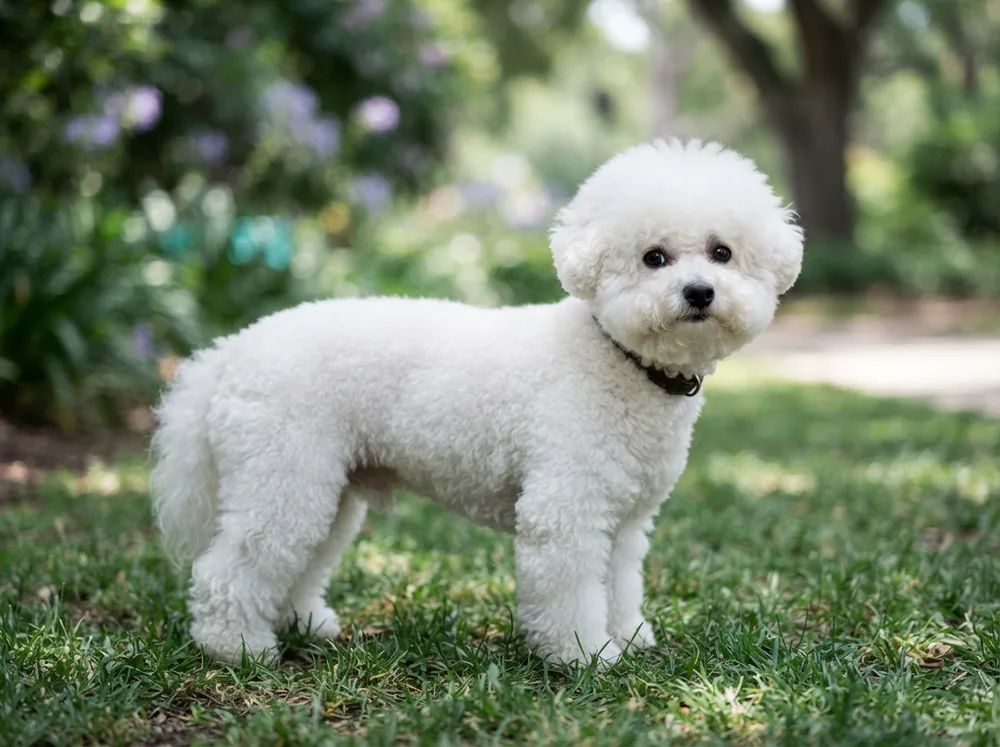
Is a mini Bichon Frise a real size?
No. The Bichon Frise standard is 5.4 to 8.2kg, and no kennel club recognises a miniature. A mini Bichon Frise is a dog bred or kept at roughly 1.5 to 3kg, which raises the risk of low blood sugar and fragile bones while costing more than a $3,500 to $6,000 normal placement.
The label, explained honestly
There is one Bichon Frise, and it is not mini
The Bichon Frise is a single recognised breed. The breed standard puts an adult at 5.4 to 8.2kg and 23 to 30cm at the shoulder, and that is what we weigh in the shop.
No kennel club recognises a miniature, teacup or micro variety. Those words describe a Bichon bred or kept below the range, renamed so the shortfall sounds exclusive rather than risky.
So when a listing offers a mini Bichon Frise, the honest reading is not "a smaller Bichon". It is "a Bichon that has been made smaller than the breed is supposed to be".
Standard against label
- Breed standard: 5.4-8.2kg, 23-30cm
- Label claim: 1.5-3kg as an adult
- Kennel club status of the label: none
- What the label signals: bred below range
- Breeds recognised: one, the Bichon Frise
Where mini Bichon listings come from
On the Singapore results we measured on 18 October 2026, three supply routes do almost all the work. The first is a local seller putting the label straight into the page title.
The second is overseas export. One Korean exporter we measured was quoting $4,923 for a mini Bichon with Singapore shipping included, sold on photos and a video call rather than a viewing.
The third is breeding. Pair the smallest dogs in a line, litter after litter, and some puppies stay very small. That is how the size is produced, and it is why the label is a statement about breeding practice rather than about lineage.
The three routes
- Local sellers using the label as a title
- Overseas exporters shipping to Singapore
- Repeated pairing of the smallest dogs
- None of them is a recognised size class
- All of them price the label, not the dog
The health bill for an undersized Bichon
Undersizing is not a cosmetic choice. A body built at 1.5 to 3kg carries problems that a 5.4 to 8.2kg body does not, and the owner carries them at three in the morning.
Hypoglycaemia is the first. Blood sugar can crash in a very small puppy, and some need feeding every few hours including overnight. Fragile bones follow, where a sofa jump can mean a fracture and surgery.
Then the quieter ones. A short jaw crowds the teeth, so retained baby teeth and early dental disease are common. Small frames also carry higher rates of patella luxation, the slipping kneecap that turns into a limp.
| Problem | What it means day to day |
|---|---|
| Hypoglycaemia | Blood sugar crashes; some puppies need overnight feeding |
| Fragile bones | A hop off a sofa can mean a fracture and an operation |
| Dental crowding | Retained teeth and early dental disease in a short jaw |
| Patella luxation | A slipping kneecap that shows up as a skipping gait |
| Temperature loss | Small bodies chill fast, especially in air conditioning |
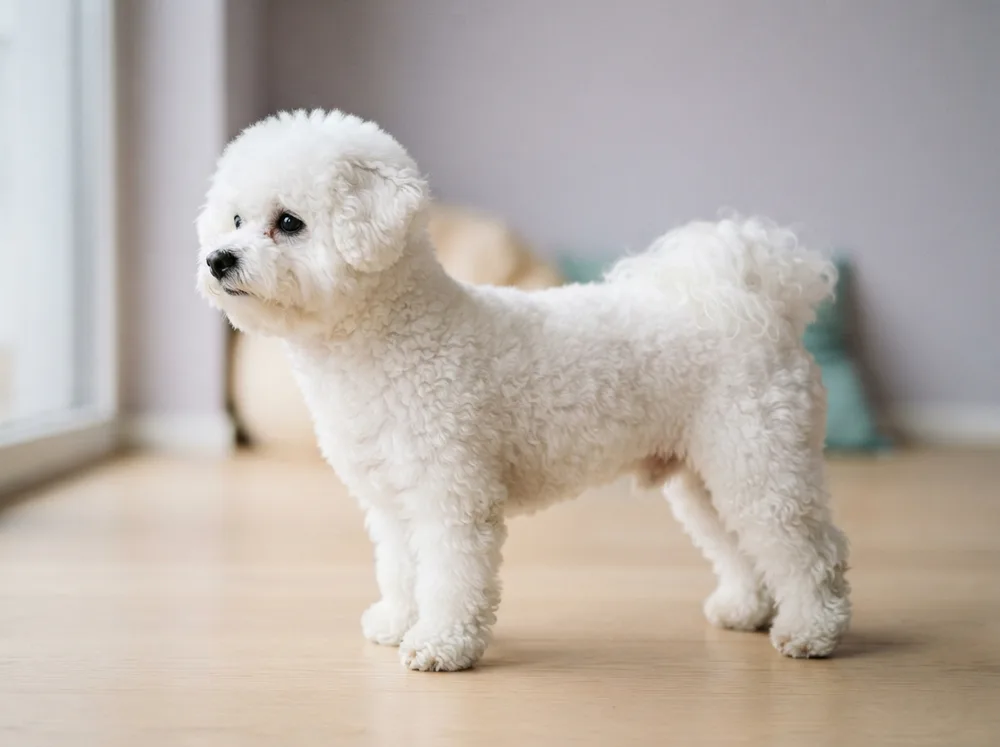
A small Bichon is fine, an undersized one is not
This is the part the label hides, and it matters. A puppy at the lower end of the range, growing into a 5.5 to 6kg adult, is a perfectly normal Bichon.
A Bichon Frise small enough to sit at the lower end of the range, growing into a 5.5 to 6kg adult, is a perfectly normal dog.
Runts exist in every litter, and we have placed small-framed puppies ourselves. The difference is disclosure. A small dog sold as a small dog, with its records open and its parents' weights on the table, is an honest sale.
The same dog sold as a rare miniature at a premium is not. The animal is identical; the claim around it is the problem.
What is the smallest size of a Bichon Frise?
About 5.4kg is the bottom of the recognised range, and it is where a healthy Bichon ends. Some sellers write miniature Bichon Frise instead, and the answer does not change.
Individual dogs vary either side of that number, as they do in any breed.
The important distinction is between a naturally small dog and a deliberately small one. A 5.2kg adult from two normal parents is variation. A litter bred to land at 2kg is a different project entirely.
How big is a teacup bichon?
Teacup sellers usually promise an adult under 2kg. That is roughly a third of the breed standard, and it sits at the extreme end of the same label family.
How big is a Bichon Frise by comparison? 5.4 to 8.2kg, against the sub-2kg claim. At that size the risks above stop being possibilities and become everyday concerns.
The dog is also difficult to exercise safely, hard to groom without stress, and fragile around children.
If you want a genuinely small white dog, the honest route is a breed that is small by design rather than a Bichon shrunk for a listing. We would rather tell you that than sell you the other thing.
Teacup, decoded
- Claimed adult size: under 2kg
- Breed standard: 5.4-8.2kg
- Same label family as mini and micro
- Higher risk of every condition above
- Not a variety recognised by any club
What a mini Bichon Frise costs in Singapore
A normal Bichon Frise placement with us is $3,500 to $6,000 all-in, which includes the 30-item starter kit, delivery and playpen setup, a first lesson with an AVS-certified trainer and licensing at purchase.
Label listings run above that. The mini Bichon Frise price we measured overseas was $4,923 before flights, insurance or the cost of a health problem found after arrival. Two local label listings sat between $3,700 and $5,500.
So the premium is real and it buys a smaller frame, not a rarer breed. Our Bichon Frise price guide breaks down what the all-in figure actually covers.
What you are comparing
- Our all-in range: $3,500–$6,000
- Includes kit, delivery, training lesson, licensing
- Overseas label quote seen: $4,923
- Local label listings seen: $3,700-$5,500
- Premium buys smaller size, not a breed
What is the downside of a Bichon Frise?
Asked honestly, the downsides are real and none of them shrink with the dog. A grooming salon visit runs every four to six weeks at roughly $70 to $120, plus brushing between.
The coat mats if you skip it, and no size label saves you that. Bichons also announce the lift, the delivery rider and the corridor, and they dislike long hours alone.
The full picture, including the health risks that come with the breed rather than the label, is in the Bichon health guide linked below.
What to ask a seller who uses the label
Start with the licence. Every legal Singapore pet shop holds an AVS licence published on the AVS public registry, and ours is AS24J00046.
Then ask for the parents' adult weights. A seller who can show two normal-sized parents and a puppy at the lower end of the range is telling you something true. A seller describing a one-off rare size is not.
Finally, ask to meet the dog. A video call cannot show you how a puppy moves, how quickly it tires or how it handles being handled, and those are the things a small frame changes first.
The checklist
- AVS licence number, checked on the registry
- Parents' adult weights in writing
- Vaccination and microchip records
- An in-person viewing, not video only
- A written return policy
- A seller who says the size out loud honestly
What we do instead
We place purebred Bichon Frises at the recognised size, white only, and we do not use minis, teacups or any other size label. That is a policy, not a shortage.
If a puppy happens to sit at the lower end of the range, we will tell you its current weight and its parents' weights and let you decide. What we will not do is invent a category to charge more for it.
Meet the Bichon Frise puppies currently with us, or start from the Bichon.sg home page for the breed in full. We are at 2 Balestier Road #01-701, weekdays 12pm to 6pm and weekends 10am to 6pm.
Keep exploring
Frequently asked questions
Is a mini Bichon Frise a real breed?
No. Kennel clubs recognise one Bichon Frise, at 5.4 to 8.2kg and 23 to 30cm. Mini, teacup and micro are labels sellers apply to dogs bred below that range, and the label carries health risk rather than value.
What is the smallest size of a Bichon Frise?
About 5.4kg is the bottom of the recognised range. A healthy adult below that is the exception rather than a size class, and anything sold at 1.5 to 3kg has been deliberately undersized.
How much does a mini Bichon Frise cost?
A normal Bichon placement in Singapore is $3,500 to $6,000 all-in. Labels carry a premium of a few thousand on top, and that premium buys a smaller frame with more medical risk, not a rarer breed.
How big is a teacup bichon?
Teacup sellers usually promise an adult under 2kg. That is roughly a third of the breed standard, and at that size low blood sugar, fragile bones and dental crowding are everyday concerns rather than possibilities.
Can a small Bichon still be healthy?
Yes. A puppy at the lower end of the range, around 5 to 6kg as an adult, is a normal Bichon. The difference is disclosure: a small dog sold honestly with its records open is fine, a small dog sold as a rare size is not.
What is the downside of a Bichon Frise?
Grooming every four to six weeks at about $70 to $120 a visit, a coat that mats if you skip brushing, a tendency to announce every visitor, and a dislike of long hours alone. None of that is mitigated by buying a smaller dog.
Are mini Bichons HDB approved?
The Bichon Frise is approved as item 4 on the HDB list, one dog per flat. A dog sold under a size label is still a Bichon on paper, but a seller who misrepresents its size is not a seller to trust with the paperwork.
How do I check the seller is licensed?
Ask for the AVS licence number and look it up on the AVS public registry of licensed pet shops. Ours is AS24J00046. A seller who cannot give a number that appears there is not a licensed shop.
Do you sell mini or teacup Bichons?
No. We place purebred Bichon Frises at the recognised size, from 5.4 to 8.2kg as adults, and we do not use size labels. If you want a smaller dog than a Bichon, we will tell you honestly which breeds fit.
Why do overseas sellers quote more for a mini?
Because the label is the product. We measured a Korean listing at $4,923 with Singapore shipping included, against a local all-in range of $3,500 to $6,000 that includes the starter kit, delivery and licensing.
Meet your Bichon
Come say hello at Balestier
2 Balestier Road #01-701, Singapore 320002 · Weekdays 12pm–6pm · Weekends 10am–6pm. Or message us first: tell us about your home and routine, and we'll tell you honestly if a Bichon fits.
Meet the Bichons we actually place
Purebred white Bichon Frises at the recognised size, with the parents, the records and the price in front of you before you decide.
See available puppies