The true lifetime budget
The Real Cost of Owning a Bichon Frise
The full month-by-month and year-by-year budget the price guide links to: what you pay upfront, what the recurring years really cost, why grooming quietly outgrows the purchase price, and how to spend less without cutting a corner.
Nelson and Kim, Curious Tails · AVS licence AS24J00046
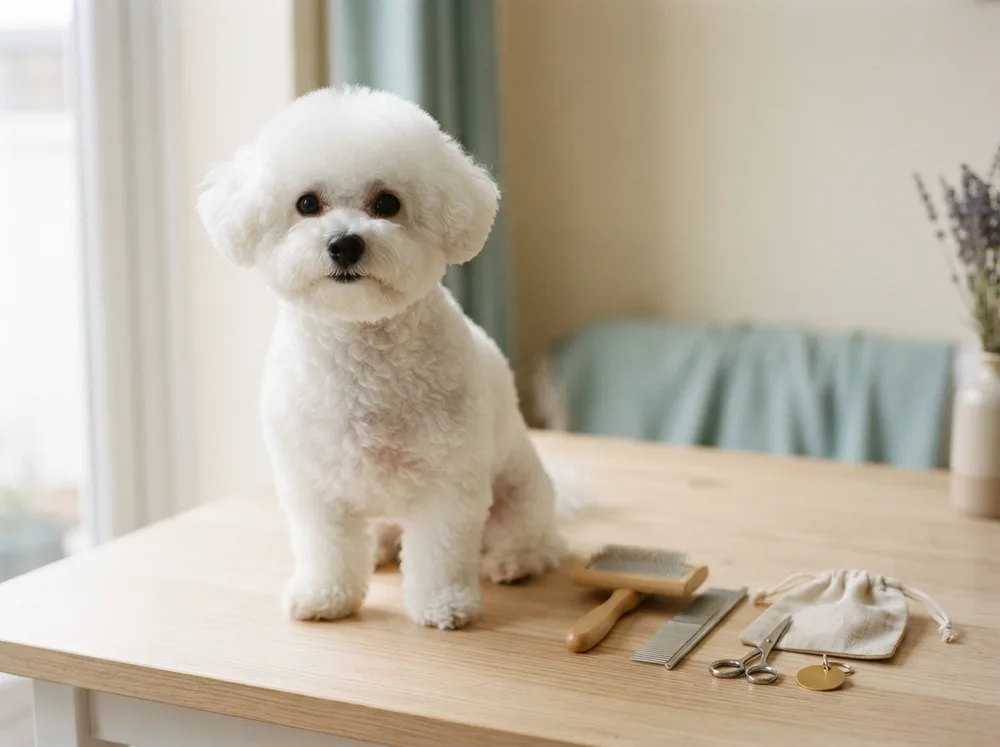
How much does it really cost to own a Bichon Frise in Singapore?
Owning a Bichon Frise is a 14 to 15 year financial commitment. The upfront cost is $3,500–$6,000 all-in, or an adoption fee of $0 to $400. After that, budget roughly $2,000 to $3,500 a year, grooming every 4 to 6 weeks being the single biggest line. Over a lifetime, grooming alone passes what you paid for the puppy.
Every dollar, upfront and yearly
The upfront cost: what you actually pay to bring one home
Start with the number everyone types first, the bichon frise cost to walk one through your door. From our shop the all-in price is $3,500–$6,000, and where a given puppy sits inside that band is honest arithmetic: its age when you reserve, its expected adult size, and its breed lines, never a colour surcharge, because every Bichon we place is white. If buying is not your route, an adoption fee through a Singapore rescue typically runs $0 to $400. Purebred Bichons surface in rescue rarely, so most adopters wait, but if an adult suits your home it is a genuinely good route.
The word that matters in all-in price is all. Because half the Singapore market advertises a teaser figure and itemises the rest at the counter, buyers arrive braced to pay a second time for vaccinations, the microchip, the first vet visit, the dog licence and a cabinet of supplies. Ours already covers every one of them, which is the single most important thing to grasp before you build a budget: do not count those lines twice. When you compare us against a cheaper headline, add back everything the headline quietly leaves out before you decide which is truly dearer. The whole band, itemised line by line, sits on our Bichon price guide.
What the all-in price already covers
- Vet health check with full records
- Vaccinations at weeks 6 and 8 (+12, optional 16)
- Microchip and breed documentation
- 30-item starter kit, itemised at $533
- Free delivery and playpen setup
- Free AVS-certified first training lesson
- First dog licence filed at purchase
- Free boarding up to a month, 5-day bring-back
Your first month home, and why it costs less than you fear
The internet will tell you the first month with a new dog is a spending spree, and for many buyers it genuinely is: crate, playpen, bowls, bed, carrier, the first bag of food, a pee tray, a month of pads, shampoo, a brush and a comb, plus the microchip and first jabs if the seller left them out. Priced from scratch, that stack alone runs several hundred dollars on top of the puppy.
Here is the quiet advantage of buying all-in: most of that month-one list is already in the box. The starter kit, itemised at $533, covers the bulk of the gear, the playpen is set up for you on delivery, and the health work and first licence are done before the dog arrives. What counts as genuinely new spend in month one, then, is small: the food you top up as the puppy grows, replacement pads and poop bags, and your first pet insurance premium if you choose to start one. Budget one to two hundred dollars of real new outlay, not the alarming figure the generic checklists quote.
Month one, if you bought all-in
The starter kit, playpen, microchip, vaccinations and first dog licence are already covered, so month-one extras are mostly consumables. Reserve the bigger money for the recurring lines below, not the first four weeks.
The recurring yearly budget, line by line
This is the table the generic guides never build for a Bichon. Almost every Singapore ‘cost of owning a dog’ page hands you a single monthly band for a nameless medium dog; the Bichon has one line that dwarfs the others and deserves to be seen on its own. Here is the honest year, assuming a healthy adult and today’s Singapore prices. Read grooming first, because for this breed it is not a footnote, it is the headline, and it is why we say the monthly cost of the coat decides the breed more than the sticker on the puppy ever will.
Add the everyday lines together and a typical year, before optional insurance, lands at roughly $2,000 to $3,500. Take the insurance and the comfortable end pushes past $4,000. None of it is a shock if you have read this far, which is exactly the point of putting the arithmetic in front of the sale rather than behind it.
| Yearly line | Typical cost | What it buys |
|---|---|---|
| Professional grooming | $900–$1,500 | A full groom every 4 to 6 weeks at $70 to $120 a session. The single biggest line in owning the breed. |
| Food | $700–$1,100 | Quality food for a 5 to 8kg dog, about $60 to $90 a month. |
| Vet wellness + preventatives | $200–$450 | Annual checkup and booster, plus year-round heartworm, flea and tick preventatives. |
| Dog licence | ~$13.50 | Sterilised, paid online for the 10% rebate. Or $31.50 once for life. |
| Treats, toys, replacements | $150–$400 | Chews, toys, shampoo, and the brush and comb you replace over time. |
| Pet insurance (optional) | $360–$720 | About $30 to $60 a month. Cheapest started while the puppy is young. |
The once-in-a-while costs that catch people out
A yearly average hides the lumpy bills, and pretending they do not exist is how budgets break. Three land irregularly. The first is sterilised surgery, usually around month seven, commonly $100 to $350 at a Singapore clinic, and worth it both for the health benefits and for the far cheaper dog licence that follows. The second is dental scaling: small breeds are prone to tartar, and a professional clean under anaesthesia, which many dogs need every couple of years, runs several hundred dollars, often $300 to $800 a time. Brushing your dog’s teeth at home is nearly free and pushes those visits further apart.
The third is the one nobody wants to picture: the emergency. A swallowed sock, a bladder stone, a bad fall from the sofa, and a single episode of serious vet bills can run $2,000 to $5,000 or more. This is precisely the arithmetic pet insurance exists to smooth, and why it is cheapest to start while your Bichon is young and carries no claims history to price against. Whether you insure or self-insure by keeping a buffer, the honest move is to plan for the bad day long before it arrives, not to assume the good years are the only years.
Keep a buffer for the emergency
A single serious episode of vet bills, a swallowed object or a bladder stone, can cost $2,000 to $5,000 or more at a Singapore clinic. Either carry pet insurance, cheapest started young, or hold a savings buffer of similar size. Do not assume the good years are the only years.
The lifetime total, and the line that outgrows the purchase
Now stretch those yearly figures across the Bichon’s 14 to 15 year life, and one truth surfaces that no listing will ever lead with: the lifetime cost of the coat overtakes the price of the dog. At $900 to $1,500 a year, grooming every 4 to 6 weeks totals north of $13,000 over a lifetime, comfortably more than you paid for the puppy in the first place. Food adds another $10,000 or more. Wellness visits, preventatives, the occasional dental scaling and the odd emergency stack on top of that.
Totalled honestly, a Bichon is a $30,000-and-up dog across its life, and closer to $40,000 or $50,000 once you fold in insurance and a couple of unlucky years. Set that beside the upfront cost, and the purchase price, the number most buyers agonise over for weeks, turns out to be one of the smallest lines of all, often less than a fifth of what the dog will cost you in total. The real decision was never the sticker; it was always the fifteen years of care behind it.
The cheapest part of a Bichon is buying it. The coat, fed and groomed for fifteen years, is where the real money quietly goes.
$13,000+
grooming over a lifetime
$10,000+
food over a lifetime
$30,000+
total cost of ownership
14–15 yrs
the commitment
How to spend less without cutting a single corner
Spending less on a Bichon is not about buying cheaper, it is about spending in the order that saves the most. Have your dog sterilised on schedule and the dog licence drops from $81 a year to $13.50, with a lifetime licence at just $31.50, a small saving that compounds quietly for fifteen years. Start pet insurance while the puppy is young and claim-free and you lock in the lowest premium band before any condition can be labelled pre-existing.
The biggest lever, though, is the brush in your own hand. Line-brushing at home most days keeps the coat open to the skin so it never felts, and a coat that arrives at the salon in good condition is groomed at the base rate, not the dematting surcharge that can add $30 to $80 to a single visit. Keep a standing grooming every 4 to 6 weeks slot so the coat never drifts into trouble, and brush the teeth at home to postpone the next dental scaling. None of this cuts a corner; every one of them simply refuses to pay extra for neglect. Our grooming guide and the salon price survey show exactly where those savings live.
Cut the cost, not the corners
- Sterilise: licence falls to $13.50/yr, or $31.50 for life
- Insure young, while the premium band is lowest
- Brush at home to dodge the dematting surcharge
- Hold a standing 4 to 6 week grooming slot
- Brush the teeth at home to delay dental scaling
- Buy all-in so you never pay the same line twice
The honest bottom line
So here is the whole picture in one breath. A Bichon Frise is HDB-approved, wonderful company, and a genuine 14 to 15 year financial commitment that costs far more to keep than to buy. The upfront cost is $3,500–$6,000 all-in; the years that follow ask for roughly $2,000 to $3,500 each, most of it grooming and food; and the lifetime cost runs well past $30,000 once every line is counted.
We put all of this in front of the sale on purpose, because a dog surrendered at ten months with a matted coat and a shocked owner is the exact outcome an honest budget prevents. If those numbers fit your life, a Bichon will repay them with fourteen years of comedy and devotion. If they do not, it is far kinder to know now, warmly, than to learn it the hard way later. When you are ready to talk it through, message us at +65 8220 6408 or come and sit with the puppies at 2 Balestier Road #01-701, and we will walk the whole budget with you before a single dollar changes hands.
Keep exploring
Frequently asked questions
How much does it really cost to own a Bichon Frise in Singapore?
Budget the purchase first, then the years. Our all-in price is $3,500 to $6,000, or $0 to $400 to adopt. After that a healthy adult costs roughly $2,000 to $3,500 a year, mostly grooming and food, rising past $4,000 with pet insurance. Across a 14 to 15 year life that totals well over $30,000, which means grooming alone passes what you paid for the puppy.
Is it cheaper to adopt a Bichon Frise than to buy one?
Yes, meaningfully cheaper upfront. Adoption fees in Singapore typically run $0 to $400 against a $3,500 to $6,000 all-in purchase. Purebred Bichons appear in rescue rarely, so most adopters wait, but if an adult Bichon suits your household it is a genuinely good route. Either way the recurring yearly cost is the same, and grooming still dominates it.
Why is grooming the biggest cost of owning a Bichon?
The powder-puff coat traps shed hair instead of dropping it, the real low-shedding benefit, but it must be brushed at home and professionally groomed every 4 to 6 weeks for life. At $70 to $120 a session that is about $900 to $1,500 a year, and north of $13,000 across a lifetime: the single largest line in owning the breed, and the reason we state it before the sale.
How much is the dog licence for a Bichon, and how do I lower it?
Every dog in Singapore needs an AVS dog licence. A sterilised Bichon is $15 for one year or $35 once for life, and paying online or by GIRO adds a 10% rebate, so the lifetime licence works out to $31.50 and the annual to $13.50. Unsterilised costs far more, $81 a year after the rebate, which is one more reason to sterilise. We file the first licence for you at purchase.
Do I need pet insurance for a Bichon Frise?
It is optional, not required, but worth doing the maths on. Cover runs about $30 to $60 a month, so $360 to $720 a year, while a single emergency such as a swallowed object or bladder stones can cost $2,000 to $5,000 in vet bills. Insurance is cheapest started while your Bichon is young and claim-free. If you skip it, keep a savings buffer of similar size for the bad day.
How much should I budget in the first month?
Less than the generic checklists suggest, if you buy all-in. Because the starter kit, playpen, microchip, vaccinations and first licence are already included, genuine new spend in month one is mostly consumables: topped-up food, replacement pads, poop bags, and your first insurance premium if you start one. Budget one to two hundred dollars, and save the bigger money for the yearly grooming and food lines.
Meet your Bichon
Come say hello at Balestier
2 Balestier Road #01-701, Singapore 320002 · Weekdays 12pm–6pm · Weekends 10am–6pm. Or message us first: tell us about your home and routine, and we'll tell you honestly if a Bichon fits.
Ready to meet one?
Every Bichon in our shop is HDB-approved, licensed and priced all-in, with the whole budget explained before you decide. See who is looking for a home right now.
See available puppies