The complete breed guide
What Is a Bichon? The Complete Breed Guide
The word covers a whole family of small white companion dogs, but in Singapore it almost always means one of them. Here is the full breed guide, written by the AVS licensed shop that places these dogs, with the downsides left in.
What is a bichon?
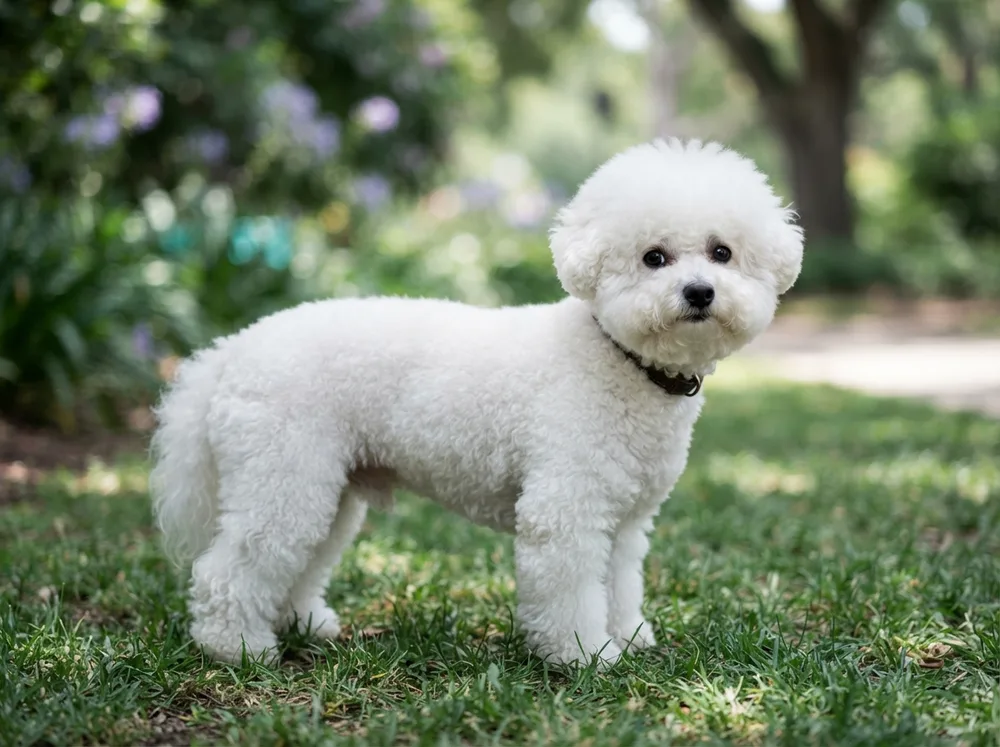
A bichon is a type of small white companion dog, not a single breed: the bichon type covers the Bichon Frise, the Maltese, the Havanese, the Bolognese and the Coton de Tulear. In Singapore the word is used almost exclusively for the Bichon Frise, a toy dog of roughly 5 to 8 kg with a curly white double coat, a commonly cited lifespan of 12 to 15 years, and a place as item 4 on HDB’s approved breed list.
One word · five breeds · one very fluffy answer
What the word bichon actually means, and how to say it
Search the word on its own and you get two different answers, which is exactly why this page exists. Wikipedia has one article for the bichon type and a separate one for the breed. A dictionary entry says only that it means the Frise. A local listing uses the short form for a specific puppy in a specific shop. All of them are right, and none of them tells you which one you are looking at.
The word is French, and the derivation most commonly cited traces it to barbichon, a diminutive of barbet, the shaggy French water dog that sits somewhere near the root of the whole group. Shorten barbichon and you get the modern word. The Royal Kennel Club describes the family more simply, as a group of white breeds that originated around the Mediterranean, and Google’s own breed panel lists origins across France, Spain, Belgium and Tenerife in the Canary Islands, where the Frise was long known as the Tenerife dog.
Pronunciation trips up almost every first-time buyer, so here it is plainly: BEE-shon Free-ZAY. The second word is not a surname, it is just the French for curly, describing the coat. Say the whole thing and you are literally saying "small curly-coated dog", which is about as honest as breed names get.
5.4–8.2 kg
Adult weight, per the breed panel
23–30 cm
Height at the shoulder
12–15 yrs
Commonly cited lifespan
$3,500–$6,000
Our all-in Singapore band
One word, five breeds: the bichon family
Five breeds sit inside the group, and they look enough alike that Singapore buyers regularly walk into a shop wanting one and leave with a different one. They share the small frame, the companion history and, in four of the five, the white coat. What separates them is coat texture and behaviour, and those differences matter far more day to day than the family resemblance suggests.
The one people mix up most often is the Maltese, and the giveaway is texture rather than colour. A Maltese carries a single, straight, silky coat that hangs; the Frise carries a curly, springy double coat that stands away from the body. Put the two side by side and you can tell them apart with your hand in a second, even when the groomer has cut them into the same rounded shape. Our Maltese comparison and Havanese comparison go through the daily differences properly.
| Breed | Coat | Typical adult weight | The short version |
|---|---|---|---|
| Bichon Frise | Curly white double coat | 5.4–8.2 kg | The one Singapore means by the word; item 4 on the HDB list |
| Maltese | Straight silky single coat | 3–4 kg | Smaller, hangs rather than springs, quieter energy |
| Havanese | Wavy silky coat, many colours | 3–6 kg | The only one commonly not white; very trainable |
| Bolognese | Loose flocked white coat | 2.5–4 kg | Rare here; calmer and more reserved |
| Coton de Tulear | Cotton-textured white coat | 3.5–6 kg | Rare here; softer coat, similar sunny nature |
What one looks like: the powder puff double coat
The physical picture is consistent: a small, sturdy, square little dog with a rounded head, dark round eyes and a black nose that reads clearly against the white. Google’s breed panel puts adult weight at 5.4 to 8.2 kg and height at 23 to 30 cm at the shoulder, which matches what we weigh in the shop. This is not a fragile teacup animal. Under the fluff sits a solid, well-muscled dog that can walk a proper distance and takes a toddler’s enthusiasm without breaking.
The coat is the signature and the whole commitment. It is a genuine double coat: a soft dense undercoat below a curly outer coat that springs back when you press it, which is where the old powder puff description comes from. Breed standards allow shadings of cream, apricot or buff, particularly around the ears on a young dog, but the adult presentation is a white coat, and white is the only colour we place. Our colour guide explains where puppy shading goes as the coat matures.
Almost every one you meet in Singapore is wearing a teddy bear cut, the rounded pet trim that keeps the head soft and the body short enough to survive the humidity. The elaborate show silhouette is a competition style, not daily life here. The teddy bear cut guide covers what to ask a groomer for and what it should cost.
Temperament in short: a merry velcro clown
Ask ten owners and you get the same three words: merry, gentle, affectionate. These are people-first dogs, bred for centuries to sit on laps and charm crowds, and it shows. They are good with children, easy with other pets, quick to learn and visibly delighted by company. Several times a day a happy one will detonate into a lap of frantic zoomies around the living room, which owners call the bichon blitz and which is one of the great small joys of the breed.
The flip side is the single most important thing on this page. This is a velcro dog. It does not merely enjoy your company, it organises its day around it, and in a flat that empties at 8am and refills at 7pm that devotion turns into separation anxiety: barking that carries down the corridor, scratched doors, lost toilet habits. It is manageable with a deliberate plan and it is not manageable by hoping. The full picture is in our temperament guide, and the week-by-week routine is in the separation anxiety plan.
The whole appeal and the whole problem are the same trait. This is a dog that wants to be with you, which is wonderful if someone is home and genuinely hard if nobody is.
What a bichon puppy is actually like
A bichon puppy goes home at around week nine, after the six and eight week vaccinations, with the twelve week shot still ahead and an optional sixteen week booster after that. At that age it is a palm-sized white scribble with an outsized personality, usually somewhere between 1.5 and 2.5 kg, and it will spend the first fortnight deciding that you are its entire world.
Two things surprise new owners. The first is how slow housebreaking is: a toy bladder simply cannot hold on, and the breed carries a stubborn streak about rainy walks, so five to six months of patient routine is normal rather than a failure. The second is the coat change at roughly eight to twelve months, when the soft puppy fluff is pushed out by the adult double coat and the dog will mat overnight if the brushing lapses. Both are covered in our coat change guide.
Every puppy we place leaves sterilised at around seven months by arrangement, licensed at purchase, and with a free AVS-certified first training lesson already booked, because the fortnight after homecoming is when the habits that prevent barking and anxiety are actually set. There is also a 30-item starter kit worth $533, free delivery with playpen setup, free boarding for up to a month, and a 5-day bring-back if the fit is wrong.
A puppy’s first year, in order
- Vaccinations at weeks 6 and 8, then 12, with an optional 16-week booster
- Home at around week 9, usually 1.5 to 2.5 kg
- Housebreaking reliable at five to six months, not five to six weeks
- Coat change at roughly 8 to 12 months: brushing cannot lapse
- Sterilisation at around seven months by arrangement
- Licensed at purchase; free AVS-certified first training lesson
- 5-day bring-back if the fit turns out wrong
The honest downsides nobody prints in the brochure
Every page on the first page of Google sells the charm. Here are the three things that actually send these dogs back, in the order we see them. Separation anxiety is first and it is not close: a household out of the house nine hours a day, with no midday break and no plan, will meet this problem within a month. Grooming is second, and it never ends: a professional trim every four to six weeks plus brushing at home, for twelve to fifteen years. Slow housebreaking is third, and it is merely annoying rather than serious.
Two smaller ones deserve a mention because the SERP asks about them constantly. Tear staining shows up as rust-coloured tracks under the eyes on a white face, cosmetic rather than medical in most cases but very visible on this coat. And the breed is genuinely alert, so it will announce the lift, the delivery rider and next door’s cat. That is background noise in a landed house and a real consideration in an HDB corridor where sound travels between units.
None of these is a dealbreaker for the right home. All of them are dealbreakers for the wrong one, which is why we ask about your daily schedule before we talk about a puppy at all.
The one that actually sends these dogs back
If your flat sits empty eight or nine hours most weekdays, with no midday break, no second adult on a different shift and no plan to build alone-time slowly, this is the wrong breed for that schedule as it stands. We would rather say so before a sale than take a dog back after one. Fix the day structure first, then talk to us.
Low shedding, grooming and how long they live
The low shedding reputation is real but it is routinely oversold, including by Google’s own knowledge panel, which flatly labels the breed hypoallergenic. No dog is. Allergy reactions are to proteins carried in dander, saliva and urine, not to hair, and every warm-blooded animal produces them. What this coat genuinely does is trap the loose hair and dander in its own curl instead of scattering it across your sofa, which for many allergy sufferers is a meaningful difference and for some is no help at all. The only honest test is thirty minutes in a room with one, which we arrange at the shop. The science in full is on our shedding and allergies page.
That same trapping is why grooming is non-negotiable rather than cosmetic. Hair that does not fall out stays in the coat and felts into mats against the skin, and in Singapore humidity a neglected coat can go from fine to matted in a fortnight. Budget a salon visit every four to six weeks and a few minutes of brushing most days. Our grooming guide has real Singapore salon prices from named groomers.
On lifespan, be careful with the numbers you see. Google’s breed panel says 12 to 15 years while its own comparison row says 12 to 21, and we will not pretend to resolve that for you: 12 to 15 is the figure commonly cited by kennel clubs and the one we plan around. The conditions worth knowing are patellar luxation, allergic skin disease made worse by the climate here, bladder stones and early dental disease, none of them universal and all of them cheaper to catch early. The detail is on our health guide.
What we will and will not claim
- We will not use the word hypoallergenic as a promise, whatever Google’s panel says
- Low shedding is real: the coat traps loose hair instead of scattering it
- Trapped hair mats, so a salon visit every four to six weeks is the trade
- A 30-minute trial visit in the same room beats every claim on every website
The bichon in Singapore: HDB, price and the climate
Three local facts change the decision, and none of them appear on any encyclopedia currently ranking for this word. First, housing: the Frise is item 4 on HDB’s approved list of 62 breeds, verified on hdb.gov.sg in July 2026, so it is HDB approved outright. One dog per flat, and a breach carries a fine of up to $4,000. Item 62 also lets a cross of any two approved breeds qualify, which is how a poochon or maltichon stays legal. Our HDB guide has the full rules and our mixes guide covers the crosses.
Second, price, and the spread on the search results page is genuinely confusing: one local blog quotes up to $12,800 while a listing on the same page advertises $2,388. Both are real numbers and neither is a like-for-like comparison, because the low ones are usually a headline figure before vaccinations, licensing, sterilisation and a starter kit are added. Ours is $3,500–$6,000 all-in, published, with the line items shown on the price guide. Licensing itself is modest: $13.50 a year under five months, $81 a year for an unsterilised adult, and $13.50 a year or $35 for life once sterilised.
Third, the climate. Year-round humidity is hard on a dense double coat and on the skin underneath it, which pushes grooming from a preference to a routine and makes the shorter pet trim the sensible default. It is entirely manageable. It is just the thing a guide written in London will never tell you.
The local facts that change the decision
- Item 4 on HDB’s 62-breed approved list (hdb.gov.sg, verified July 2026)
- One dog per flat; breach fine up to $4,000
- Item 62: a cross of two approved breeds also qualifies
- Our published all-in band: $3,500–$6,000
- Licence $13.50/yr under 5 months; $81/yr unsterilised adult; $35 lifetime once sterilised
- Humidity makes the shorter pet trim the sensible default
- 30+ Bichons placed by Nelson and Kim, AVS licence AS24J00046
Every Bichon guide on the site
Frequently asked questions
What is a bichon?
A bichon is a type of small white companion dog rather than one single breed. The bichon type covers five breeds: the Bichon Frise, the Maltese, the Havanese, the Bolognese and the Coton de Tulear. In Singapore the word is used almost exclusively for the Bichon Frise, a toy dog of roughly 5 to 8 kg with a curly white double coat and a commonly cited lifespan of 12 to 15 years.
What does the word bichon mean, and how do you pronounce Bichon Frise?
The word is French and is most commonly traced to barbichon, a diminutive of barbet, the shaggy French water dog near the root of the group. Frise simply means curly, describing the coat, so the full name reads as small curly-coated dog. It is pronounced BEE-shon Free-ZAY.
Is a Bichon a good pet?
For a household that is home for a good part of the day, yes, and genuinely so. These are merry, gentle, affectionate dogs that are good with children and other pets, easy to train, and small enough for a flat. The honest qualifier is that they bond hard and struggle when left alone all day, so the daily schedule matters more than the size of your home.
Are Bichons high maintenance?
On grooming, yes. Because the coat traps loose hair instead of dropping it, that hair mats against the skin unless it is managed, so plan on a professional trim every four to six weeks plus brushing most days, for the whole of the dog’s life. On everything else they are easy: modest exercise needs, no specialist diet, and a forgiving temperament for first-time owners.
Do Bichons bark a lot?
Not excessively by nature, but they are alert and will announce the lift, the delivery rider and passers-by. That matters more in an HDB block where a shared corridor carries sound between units. A dog that is exercised, secure and trained early is a quiet neighbour; nuisance barking almost always traces back to boredom or to being left alone too long.
What is the downside of a Bichon Frise?
Three things, in the order they cause trouble. Separation anxiety is the big one: this is a velcro dog that struggles with long empty days. Grooming is a lifelong commitment of brushing plus a salon visit every four to six weeks. And housebreaking is slow, thanks to a small bladder and a stubborn streak about rainy walks. Tear staining and alert barking are smaller, manageable annoyances.
What is the average price of a Bichon puppy, and why are they expensive?
In Singapore the advertised range is wide and confusing: local listings run from around $2,388 to blog figures as high as $12,800. The low numbers are usually headline prices before vaccinations, licensing, sterilisation and a starter kit are added. Our published all-in band is $3,500–$6,000. Cost is driven by small litter sizes, the health screening and vaccination schedule, and the grooming and care a coated breed needs before it goes home.
Are bichons hypoallergenic?
No dog is, and we will not use the word as a promise even though Google’s own breed panel does. Allergy reactions are to proteins in dander, saliva and urine rather than to hair. What this coat genuinely offers is less spread, because it traps loose hair and dander instead of scattering it. For many allergy sufferers that is a meaningful difference and for some it is not enough. The only honest test is meeting the dog.
Which is better, Maltese or Bichon?
Neither, they suit different homes. The Maltese is smaller at 3 to 4 kg with a straight silky single coat that hangs; the Frise is sturdier at 5 to 8 kg with a curly double coat that springs. The Frise is generally the more boisterous, clownish playmate and the Maltese the calmer lap companion. Both are on HDB’s approved list, and both need serious grooming.
Are bichons HDB approved in Singapore?
Yes. The Bichon Frise is item 4 on HDB’s approved list of 62 breeds, verified on hdb.gov.sg in July 2026. HDB allows one dog per flat and a breach carries a fine of up to $4,000. Item 62 also allows a cross of any two approved breeds, which is why a poochon or maltichon qualifies.
How long do bichons live, and what do they usually die from?
Twelve to fifteen years is the figure commonly cited by kennel clubs and the one we plan around, although Google’s own panels disagree with each other and one row suggests up to 21. There is no single cause of death for the breed. The conditions worth screening for are patellar luxation, allergic skin disease, bladder stones and early dental disease, all of which are far cheaper and kinder to catch early.
Meet your Bichon
Come say hello at Balestier
2 Balestier Road #01-701, Singapore 320002 · Weekdays 12pm–6pm · Weekends 10am–6pm. Or message us first: tell us about your home and routine, and we'll tell you honestly if a Bichon fits.
Ready to meet one in person?
Reading about the breed only gets you so far. A thirty-minute visit at Balestier answers the coat, the allergy and the temperament questions all at once.
See available Bichon puppies