Temperament, told honestly
Bichon Frise Temperament: the Cheerful Velcro Clown
The merriest little dog in the toy group, and the most devoted. Here is the cheerful velcro clown in full, with the separation anxiety caveat told first, the way the shop tells every buyer before a sale.
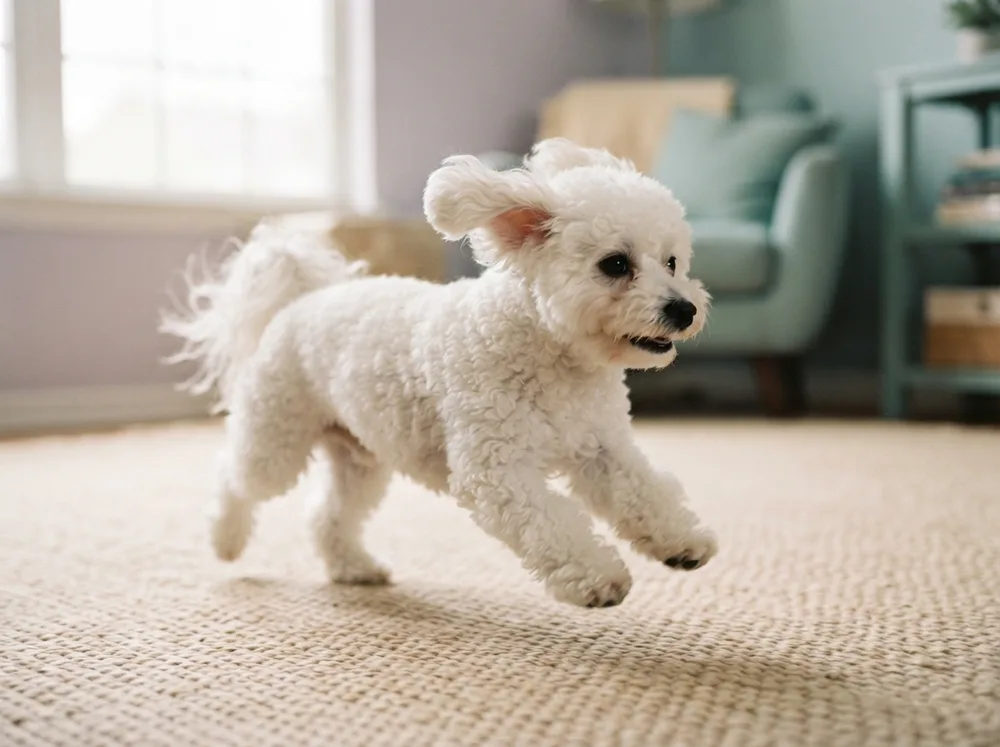
What is the Bichon Frise temperament like?
The Bichon Frise temperament is merry, gentle and endlessly affectionate, a cheerful velcro dog that treats everyone as a friend, is good with children and good with other dogs, and thrives in an HDB flat. Told first, the honest caveat: that same devotion means separation anxiety in homes left empty all day.
The cheerful velcro clown
The merry little clown: what Bichon temperament really is
Ask ten Bichon owners to sum up the breed and you get the same three words, over and over: merry, gentle, and hopelessly affectionate. The bichon frise temperament is the sunniest in the toy group, a small white dog that seems genuinely delighted by your existence and assumes every stranger, delivery rider and lift-lobby neighbour is a friend it simply has not met yet. This is a deeply people-oriented companion, bred for centuries to sit on laps and charm crowds, and it shows in every wag.
That cheerful, playful nature is the whole appeal, and it is entirely real. A well-raised Bichon is soft with toddlers, easy with visitors, and quick to flop belly-up for a rub. But the honest version of this guide does not stop at the charm. The same devotion that makes the breed so lovable is also the source of its one genuine behavioural risk, and we would rather you read that on the way in than discover it in month two. So we tell it first.
The Bichon does not really have moods, so much as one setting: delighted. The whole skill of owning one is making sure that delight survives eight hours of an empty flat.
Bichon Frise temperament at a glance
Before the detail, here is the shape of the breed in a single panel. Read it as a personality, not a spec sheet: the Bichon leads with warmth, asks for company, and pays you back in comedy. Nothing on this list is a dealbreaker on its own. The whole art of owning one is matching these traits to your real household and your real working hours.
One figure matters more than anything printed on the card, and it is not there: how many hours a day your flat sits empty. Hold that number against every trait below, because for this particular breed it is the hinge the entire decision turns on.
The Bichon temperament, at a glance
- Merry, gentle, affectionate; a true velcro dog
- People-oriented: bonds hard, follows you room to room
- Good with children and good with other dogs
- Playful clown prone to the daily bichon blitz
- Alert bark at the door, but rarely aggressive
- Trainable and food-motivated, yet slow to housebreak
- Biggest risk: separation anxiety in leave-daily homes
Told first: the velcro dog and separation anxiety
Here is the caveat, up front where it belongs. The Bichon is a velcro dog. It does not merely enjoy your company, it organises its whole day around it, trailing you from kitchen to sofa to bathroom door and settling only when you are within sight. In a home where someone is usually around, this is heaven. In a home that empties out at 8am and refills at 7pm, it is the seed of the breed’s defining problem: separation anxiety.
Left alone too long, too regularly, an anxious Bichon does not sulk quietly. It barks and howls for the whole corridor to hear, scratches at doors, leaves its food untouched, and in bad cases loses the potty training it had nailed. This is not spite, and it is not a training failure you can scold out of a dog. It is real distress in an animal built to be with its people, and it is the single most common reason Bichons are surrendered, here and everywhere.
The good news is that it is manageable, and manageable is not the same as ignorable. A Bichon can learn to handle a normal working stretch alone if you build the habit in slow, deliberate steps: short absences first, a safe playpen, food puzzles and enrichment, a midday break on the longest days, and gradually extended time by itself. Our Bichon separation anxiety plan lays out the full week-by-week routine we hand every buyer whose household is out during the day.
Separation anxiety is the one to plan for, not the one to hope away
If your flat sits empty for eight-plus hours most weekdays, with no midday break, no second adult on a different shift and no plan to build alone-time slowly, a Bichon is the wrong fit for that schedule as it stands today. We would rather say so before a sale than take one back after. Fix the day-structure first, then talk to us.
The bichon blitz: zoomies and the daily energy release
Now the fun part, and it is genuinely funny. Several times a day a happy, well-loved Bichon will simply detonate. Ears pinned, bottom tucked, it tears in frantic loops around the living room, over the sofa, under the coffee table, a white blur with no obvious destination. Owners call this the bichon blitz, and the rest of the dog world calls the identical thing the zoomies. It lasts a minute or two, ends as abruptly as it began, and is one of the great small joys of living with the breed.
The blitz is not a fault to fix, it is a pressure valve to respect. A Bichon is no high-endurance athlete, but it is a playful dog that needs a real daily outlet: two short walks, a game of fetch down the corridor, a few minutes of tug or a food puzzle. Give it that and the zoomies stay a delightful bonus. Skip it for a few days running and the same energy comes back out as barking, chewing and pestering, which is worth remembering inside a compact flat where there is nowhere for a bored dog to hide.
5–8 kg
Adult weight, easily lap-portable
2 × 20 min
Daily walks most Bichons want
12–15 yrs
Companion lifespan to plan for
Item 4
On the HDB approved breed list
Slow to housebreak: the small bladder and the stubborn streak
No honest temperament guide skips this one: housebreaking a Bichon is slow. Two things stack up. First, a toy dog has a small bladder and simply cannot hold on as long as a big dog, so accidents in the early months are a plumbing fact, not a character flaw. Second, the breed carries a real stubborn streak under all that eagerness to please, and a Bichon that has decided the rain outside is unappealing will hold that opinion with conviction.
The fix is not force, it is boredom-proof consistency. Pick one toilet spot, whether a pee tray on the service balcony or a grass patch downstairs, and reward every single correct performance the instant it happens, for weeks longer than you think you should need to. Because the breed is so food-motivated, a well-timed treat does most of the teaching for you. Crate and playpen routines keep the accidents contained while the habit sets. Most Bichons are reliably clean by five to six months with this patience; a few take longer, and none of them respond to punishment.
A Singapore note: the toilet-indoors option that HDB flats make so convenient is a double-edged tool. A pee tray is a lifesaver on storm days and across long work hours, but a puppy allowed to go indoors and outdoors with no clear rule stays confused for much longer. Decide your system early and hold the line on it. The full method lives in our Bichon potty training guide.
The alert bark in close HDB corridors
The Bichon is not a yappy breed by reputation, but it is an alert one. Bred as a companion and a pint-sized watchdog, it will announce the lift door, the delivery rider and next door’s cat with a bright alert bark. In a landed house this is background noise. In an HDB block, where your front door opens onto a shared corridor and sound travels between units, an untrained barker becomes a genuine friction point with the neighbours you live wall-to-wall beside.
The trait is very manageable, but it has to be managed on purpose, from the start. Teach a calm response to corridor sounds, reward quiet, and never accidentally reward the bark itself with attention or a treat to hush it. Above all, never leave an anxious dog alone to rehearse barking all day, which loops straight back to the separation issue above. A Bichon that is exercised, secure and gently trained is a quiet neighbour; one that is bored, lonely and untrained is the reason your unit gets a note slipped under the door. Our Bichon barking guide has the full corridor-friendly routine.
Keeping the peace in a shared corridor
- Reward silence; never shush with a treat, which teaches the dog that barking pays
- Manage the trigger: block the door gap, draw the blind to the walkway
- A tired, well-exercised Bichon barks far less than a bored one
- Solve the alone-time anxiety and most nuisance barking leaves with it
Trainable clowns and the free first lesson
Under the comedy sits a quick, clever dog. The Bichon earned its living for centuries as a circus and street-performer breed, and that heritage still shows: it is genuinely trainable, picks up tricks fast, and visibly loves the applause of a training win. The catch is the flip side of the very same coin. A Bichon works brilliantly for reward and shuts down under harsh correction, so the method matters far more than the dog. Short, upbeat, reward-based sessions win; drilling and scolding lose every time.
Because the breed is so food-motivated, positive training is almost easy once you commit to it: lure, mark, reward, repeat, keep it playful, and always stop while the dog still wants more. This is exactly why every Curious Tails puppy leaves with a free AVS-certified first training lesson already arranged. The first fortnight home is when the habits that prevent barking, anxiety and toilet chaos are actually set, and we would far rather start you right than sell you a problem. Begin early, keep it kind, and this is one of the most rewarding little dogs you will ever teach.
A good family dog and first dog, and how we screen leave-daily homes
So, the verdict buyers actually come for. Is the Bichon a good family dog? Yes, and genuinely so. It is good with children when the children are taught to be gentle back, it is patient with the noise and chaos of a busy home, and it is small enough to stay safe around toddlers with a little supervision. It is good with other dogs and easy in a multi-pet flat, with none of the guarding edge some toy breeds carry. For a first-time owner it is forgiving, eager and hugely rewarding, which makes it a strong first dog, with one asterisk.
That asterisk is the entire reason this page leads with separation anxiety instead of burying it near the bottom. The Bichon is an easy dog for the household that is home, and a hard dog for the household that is not. So we screen for it. Before we place a puppy we ask the honest questions: who is home during the day, what happens on a nine-hour workday, is there a plan and a playpen ready. If the answers worry us, we say so, we suggest fixes, and sometimes we suggest waiting. Our Bichon health guide covers the physical side of the same duty of care, and our family-dog guide goes deeper on children and multi-pet homes.
How we screen a leave-daily home
- Who is actually home, and for how many hours a day
- The realistic plan for a full nine-hour workday
- A playpen, enrichment and a midday break in place
- Slow alone-time training started from week one
- An honest answer if the schedule needs to change first
- A 5-day bring-back if the fit is wrong early
Keep exploring
Frequently asked questions
What is the temperament of a Bichon Frise?
Merry, gentle and endlessly affectionate. The Bichon Frise temperament is one of the friendliest in the toy group: a cheerful, playful, people-oriented companion that treats everyone as a friend, is good with children and good with other dogs, and lives happily in an HDB flat. The one honest caveat is that this same devotion makes the breed prone to separation anxiety when it is left alone all day.
Are Bichon Frises good with children and other pets?
Yes, on both counts. Bichons are good with children when the kids are taught to handle them gently, and they are small and soft-natured enough to be safe around toddlers with supervision. They are also good with other dogs and cats, with little of the guarding or snappiness some toy breeds show, which makes them an easy fit for a busy multi-pet home.
Are Bichon Frises prone to separation anxiety?
Yes, and it is the breed’s defining behavioural risk. A Bichon is a velcro dog that bonds hard and wants to be with its people, so a flat left empty for eight or nine hours a day, with no midday break and no slow alone-time training, can trigger barking, howling, destruction and lost potty habits. It is very manageable with a deliberate plan, but it has to be planned for, not hoped away.
Do Bichon Frises bark a lot?
Not excessively by nature, but they are alert. A Bichon will give a bright alert bark at the door, the lift and passers-by, which matters more in an HDB block where a shared corridor carries sound between units. Trained calmly from the start and given enough exercise and company, most Bichons are quiet neighbours. Nuisance barking almost always traces back to boredom or being left alone too long.
Are Bichon Frises hard to potty train?
They are slower than average, yes. A toy dog has a small bladder and cannot hold on for long, and the Bichon’s stubborn streak means it holds opinions about rainy walks. Housebreaking works through calm, food-motivated consistency: one toilet spot, an instant reward every correct time, and a playpen to contain accidents while the habit sets. Most are reliably clean by five to six months, and none respond to punishment.
Is a Bichon Frise a good first dog?
For most people, yes. The Bichon is forgiving, eager to please and highly trainable, which makes it a strong first dog, with one asterisk: it needs a household that is home for a good part of the day. A first-time owner who works nine hours with the flat empty and no plan will meet the separation anxiety problem quickly. Sort out the daily company question and it is a wonderful beginner’s dog.
What is the downside of a Bichon Frise?
The honest downsides are three. Separation anxiety is the big one: this is a velcro dog that struggles with long days alone. Housebreaking is slow, thanks to a small bladder and a stubborn streak. And the coat is a lifelong commitment of brushing and grooming every four to six weeks. None is a dealbreaker for the right home, but a buyer should know all three before falling for the fluff.
Do Bichon Frises like to cuddle?
Very much. Cuddling is close to the whole point of the breed. Bichons were developed over centuries as lap companions, and a healthy one will happily curl against you for hours, follow you from room to room, and flop over for a belly rub at the first opportunity. That affection is the joy of the breed and, in a home left empty all day, also the root of its separation anxiety.
Is a Bichon a good pet?
Yes, for a home that is around during the day. The Bichon is one of the friendliest toy breeds: merry, gentle, good with children and other pets, and happy in an HDB flat. The one honest condition is company, because this velcro dog bonds hard and struggles when it is left alone all day without a plan.
Meet your Bichon
Come say hello at Balestier
2 Balestier Road #01-701, Singapore 320002 · Weekdays 12pm–6pm · Weekends 10am–6pm. Or message us first: tell us about your home and routine, and we'll tell you honestly if a Bichon fits.
Not sure the temperament fits your week?
Tell us your household’s daily schedule on WhatsApp before you visit. If a Bichon can suit an empty-all-day flat we will say how to make it work, and if it honestly cannot, we will say that too.
Read the separation anxiety plan