The cousins compared
Bichon Frise vs Havanese and Coton de Tulear
They look almost identical for a reason: the Bichon Frise, Havanese and Coton de Tulear are cousins from the same Barbichon family. Here is the honest, Singapore-specific difference, from coats and colours to who you can actually bring home to an HDB flat.
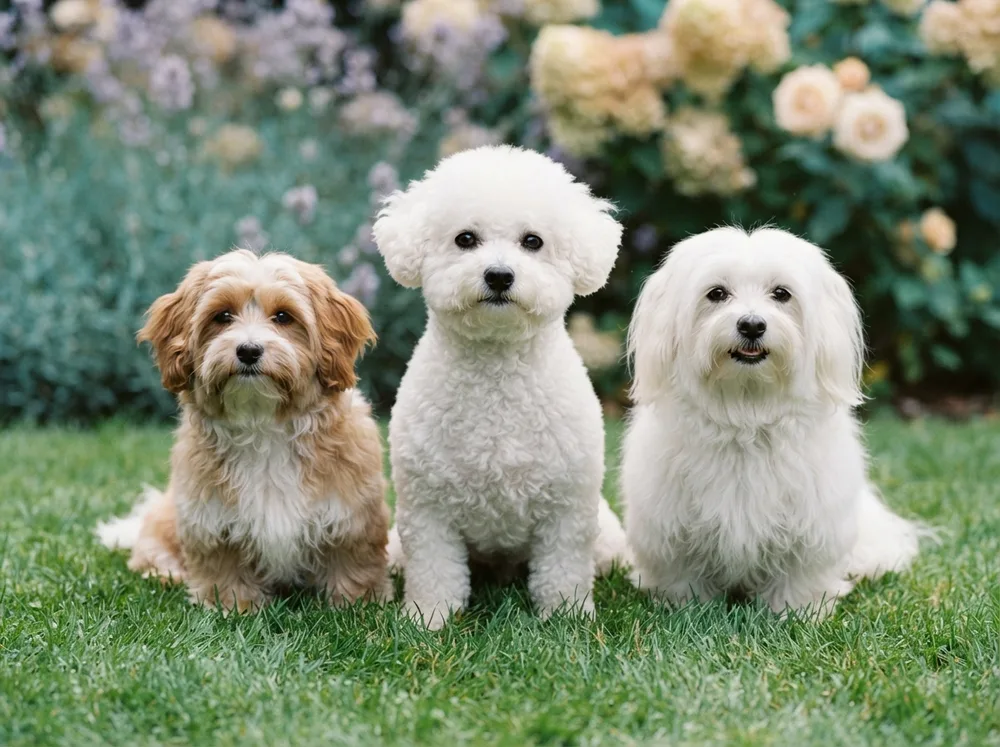
What is the difference between a Bichon Frise, a Havanese and a Coton de Tulear?
The Bichon Frise, Havanese and Coton de Tulear are three cousins from one Barbichon family: small, cheerful, low-shedding companion breeds that look alike at a glance. In Singapore the Bichon is the curly white one, HDB-approved and easy to find; the Havanese brings more colours but is rarer here; the Coton is softest-coated and rarest of all. None is truly hypoallergenic.
Bichon vs Havanese & Coton de Tulear
Three cousins from one family: the Barbichon breeds
Put a Bichon Frise, a white Havanese and a Coton de Tulear in a row and most people cannot tell which is which. That is not a coincidence. All three belong to the same old branch of dog, the Barbichon group of small companion breeds, along with their better-known cousin the Maltese and the rarer Bolognese. They share ancestors in the Mediterranean lap dogs that sailors carried from port to port, and they share the job those dogs were bred for: to be cheerful, portable and utterly devoted to a person. When a breed club calls them clownlike, it is describing a family trait, not one dog.
The differences are real but recent, shaped by where each line settled. The Bichon Frise was refined in France and Belgium into the round, curly powder puff we know today. The Havanese became the national dog of Cuba, which is why it kept a longer, flowing coat and a wider colour range. The Coton de Tulear grew up on the island of Madagascar around the port city of Tulear, prized enough to earn the nickname Royal Dog of Madagascar, and is often described simply as a Bichon type. So when you weigh bichon frise vs havanese, or a coton de tulear vs bichon, you are really choosing between three versions of the same friendly idea.
Line up all three and the family resemblance is the point: the Bichon Frise, Havanese and Coton de Tulear are cousins, not rivals, each a small companion bred to adore you.
Bichon Frise vs Havanese vs Coton de Tulear, at a glance
Here is the whole comparison on one screen, the honest version, before we walk through each row properly below. Read down the column that matters most to you, whether that is coat colour, grooming load, temperament, or simply which of the three you can actually find in Singapore. We keep purebred Bichon Frises, so treat this as a fair map rather than a sales pitch: on more than one row the Bichon is not the obvious winner, and we say so.
| Trait | Bichon Frise | Havanese | Coton de Tulear |
|---|---|---|---|
| Coat | Curly powder puff coat, dense double coat | Long, silky coat, softly wavy | Soft, cotton-like coat, single-coated |
| Colours | White only | Many: white, black, sable, gold, silver, Havana brown | White or cream, sometimes faint markings |
| Shedding | Low, sheds into the coat | Low | Low |
| Grooming | Salon every 4–6 weeks, brush most days | Regular brushing, salon every 4–6 weeks | Daily brushing, salon every 6–8 weeks |
| Size | About 5–8 kg | About 3–6 kg | About 4–6 kg |
| Temperament | Merry, bouncy, people-focused | Outgoing clown, trainable, a touch more vocal | Mellow, calm, velcro shadow dog |
| In Singapore | Common, easy to find | Uncommon, few litters | Rare, usually imported |
| Lifespan | About 14–15 years | About 14–16 years | About 14–16 years |
| Price here | $3,500 to $6,000 with us | Usually pricier, harder to source | Priciest, often waitlisted |
| HDB status | Approved, item 4 | Approved, item 8 (Bichon Havanese) | Rare here, confirm with AVS |
Coats and colours: the difference you will actually see
The clearest way to tell the three apart is to touch them. The Bichon Frise wears a curly double coat that stands away from the body like spun cotton wool, the famous powder puff coat, and by the breed standard and our own stock it is white only. The Havanese feels completely different: a longer, silky coat that falls rather than stands, softly wavy, in a paint box of colours the Bichon never will wear, from black and sable to gold, silver and Havana brown. If you have your heart set on a coloured coat, the comparison ends right here, because a Bichon is always white.
The Coton de Tulear sits between the two in texture, a soft, cotton-like coat that gives the breed its name, usually white or cream and sometimes carrying faint lemon or grey markings that often fade as a puppy grows. All three coats hide their shed hair rather than dropping it, which is the shared low-maintenance illusion, and all three demand a real grooming commitment in return. The Bichon and Havanese want a professional grooming visit roughly every 4 to 6 weeks; the Coton’s single coat mats fast and asks for daily brushing plus a salon trim every 6 to 8 weeks. Our Bichon grooming guide lays out the real Singapore cost of that promise.
Coat and colour, side by side
- Bichon Frise: curly powder puff, white only
- Havanese: long silky coat, many colours
- Coton de Tulear: soft cotton coat, white or cream
- All three are low-shedding, none is fur-free
- Bichon and Havanese: salon every 4 to 6 weeks
- Coton: daily brushing, salon every 6 to 8 weeks
Shedding and the hypoallergenic myth, told straight
Search any of these breeds and you will read the same word on every listing: hypoallergenic. The AI answer at the top of Google says it about all three. We will not, because it is not true of any dog. All three cousins are genuinely low-shedding, and the mechanism is the same across the family: dead hair catches in the coat instead of falling onto your floor, so there is very little fur on the sofa. That is a real, valuable difference from a Labrador, and in a Singapore flat where the whole household breathes the same air it matters a great deal.
But low-shedding is not the same as non-allergenic. Dog allergies are a reaction to proteins in dander, saliva and urine, not to hair, and every dog makes them. A Bichon, a Havanese and a Coton will each spread less of that protein around your home than a heavy shedder, which honestly helps many allergy households, yet none of them can promise a sneeze-free life. The only real test is meeting the dog, and our shedding and allergy guide explains exactly how to run that trial before you commit to any of the three.
The honest coat truth
All three are low-shedding because loose hair holds in the coat, not because they produce no allergen. No Bichon, Havanese or Coton is truly hypoallergenic. A 30-minute trial visit tells you more than any listing ever will.
Temperament: three cheerful clowns at different volumes
Temperament is where the family split shows most. The Bichon Frise is the merry, bouncy extrovert of the three, quick to greet and quick to play, occasionally a little reserved with a total stranger until the first treat changes its mind. The Havanese is the trainable one, an outgoing born performer that loves learning tricks and tends to be a touch more vocal, which makes it a slightly better watchdog and a slightly noisier flatmate. Neither is a heavy barker, but of the two the Havanese is the one more likely to announce a visitor at the lift.
The Coton de Tulear is the mellow cousin, the calmest and most laid-back, a true velcro shadow dog that will follow you from room to room and settle happily in an apartment. That devotion has a flip side shared right across the Bichon family: all three form deep attachments and can struggle with separation anxiety if left alone too long. None of them is built to be home by itself for a full working day without a plan, so if the flat empties from nine to six, budget for a dog walker, a helper or a midday visit whichever cousin you choose.
5–8 kg
Bichon Frise
3–6 kg
Havanese
4–6 kg
Coton de Tulear
14–16 yrs
typical lifespan
Who each cousin suits best
If you want the sociable all-rounder that is easy to find, easy to love and built for family life in a flat, the Bichon Frise is the natural pick, which is a large part of why it became one of Singapore’s quiet default small companion dogs. If you want a dog that thrives on training, games and a bit of showing off, and you do not mind a little more noise and a longer coat to manage, the Havanese rewards the effort and offers colours the Bichon cannot.
If your dream is the quietest, most devoted lap companion, and you are prepared for daily brushing and a longer search, the Coton de Tulear is the gentlest of the three. Be honest with yourself about grooming above all: every one of these coats is a standing commitment, not a one-time purchase, and the household that keeps up the brushing and the salon visits is the one that stays happy with any of them. For a fuller head-to-head across the whole Bichon family, our breed comparison hub lines them all up.
Match the cousin to your home
- Bichon Frise: sociable all-rounder, easiest to find here
- Havanese: trainable extrovert, more colours, a bit more vocal
- Coton de Tulear: calmest velcro companion, hardest to source
- All three: daily-to-frequent grooming, never a fur-free dog
- All three: want company, not a full-day-alone breed
The Singapore reality: availability and price
Here is the part the overseas comparison sites cannot tell you, because it is local. In Singapore the three cousins are not equally available, and that shapes both the wait and the price. The Bichon Frise is common and well established here; we place them regularly, and our band runs from $3,500 to $6,000 all-in. The Havanese is genuinely uncommon locally, with far fewer litters, so expect a longer search and usually a higher price for a well-raised puppy. The Coton de Tulear is rarer still, almost always imported, frequently waitlisted, and typically the most expensive of the three by a clear margin.
That availability gap is why so many Singapore buyers who fall for the look end up with a family cross instead. The Havachon, a Havanese and Bichon mix, and the Biton, a Bichon and Coton de Tulear cross, both capture the cousinly charm and are easier to find here, and both are HDB-legal as crosses of approved breeds. Our Bichon mixes guide covers those crosses honestly. And if a purebred cousin is what you truly want, we will happily point you toward a reputable source rather than talk you into a Bichon that was not your first choice.
Availability is the deciding factor here
- Bichon Frise: common, $3,500 to $6,000 with us
- Havanese: uncommon locally, longer search, usually pricier
- Coton de Tulear: rare, usually imported, often waitlisted
- Easier to find here: the Havachon and Biton crosses
HDB status and the honest verdict
For a flat-dwelling buyer, HDB status can settle the whole question, and the good news is that two of the three are firmly cleared. The Bichon Frise is item 4 on HDB’s approved list, and the Havanese is on it too, listed at item 8 as the Bichon Havanese, so both are as flat-legal as small dogs get in Singapore. The Coton de Tulear is where honesty is needed: it is imported so rarely that it does not appear in the usual HDB references, so if you set your heart on one, confirm its licensing status with AVS before you commit rather than assume. Our Bichon and HDB guide has the full rules, the one-dog limit and the licence steps.
So the honest verdict, from a shop that only sells one of the three. If you want a cheerful, allergy-friendlier, HDB-approved small companion dog that you can actually meet this month, the Bichon Frise is the easiest yes in the family, and it is our bias for a reason. If a coloured coat or extra trainability pulls you toward the Havanese, or a calmer nature toward the Coton de Tulear, those are good instincts too; just plan for a longer hunt and a bigger budget. Whichever cousin wins your heart, come and meet a Bichon first on our available puppies page, because a real visit beats every comparison chart, ours included.
Two of the three are HDB-approved outright, the Bichon at item 4 and the Havanese at item 8. The Coton is the rare one worth verifying before you fall in love.
Keep exploring
Frequently asked questions
Are the Bichon Frise, Havanese and Coton de Tulear related?
Yes, closely. All three belong to the old Barbichon group of small companion breeds, along with the Maltese and Bolognese, which is why they look so similar. The Bichon Frise was refined in France and Belgium, the Havanese became the national dog of Cuba, and the Coton de Tulear grew up in Madagascar as a recognised Bichon type. Same family, three regional versions of the same friendly little dog.
Which of the three sheds the least, and are any hypoallergenic?
All three are about equally low-shedding, because loose hair catches in the coat instead of falling onto your floor. None of them is truly hypoallergenic, though, and we will not use the word as a promise. Dog allergies come from proteins in dander and saliva, not hair, and every dog makes them. A Bichon, Havanese or Coton spreads less of it around your home, which helps many allergy households, but the only honest test is meeting the dog.
Is the Havanese HDB-approved in Singapore?
Yes. The Havanese is on HDB’s approved list at item 8, where it is written as the Bichon Havanese, so it is as flat-legal as the Bichon Frise at item 4. Both are HDB-approved small breeds, subject to the same rules: one dog per flat, an AVS licence, and the Code of Responsible Behaviour. Our Bichon and HDB guide walks through the full picture.
Is the Coton de Tulear HDB-approved and easy to find in Singapore?
The Coton is genuinely rare in Singapore, almost always imported and often waitlisted, so it is the hardest of the three to bring home and usually the priciest. Because it is so rarely kept here, it does not appear in the usual HDB breed references. If you set your heart on a Coton, confirm its licensing status directly with AVS before committing rather than assuming it is cleared.
Which of the three is calmest?
The Coton de Tulear is the mellowest, a laid-back velcro companion that settles well in an apartment. The Bichon Frise is merrier and bouncier, and the Havanese is the outgoing, trainable clown that tends to be a touch more vocal. None is a heavy barker, but the Havanese is the one most likely to announce a visitor. All three are devoted and can struggle with separation anxiety if left alone too long.
How much do a Havanese or Coton de Tulear cost in Singapore compared with a Bichon?
Our Bichon Frise band runs from $3,500 to $6,000 all-in, and the breed is common enough here that you can meet one quickly. The Havanese is uncommon locally, so expect a longer search and usually a higher price. The Coton de Tulear is rarer again, nearly always imported, and typically the most expensive of the three by a clear margin. Availability, more than the breed itself, is what drives the price gap here.
What is a Havachon or a Biton?
They are family crosses. A Havachon is a Havanese and Bichon Frise mix; a Biton is a Bichon Frise and Coton de Tulear cross. Both capture the cousinly look, both are low-shedding, and both are easier to find in Singapore than a purebred Havanese or Coton. As crosses of approved breeds they are HDB-legal too. Our Bichon mixes guide covers them honestly, and we will point you to a reputable source if a cross suits you better.
Meet your Bichon
Come say hello at Balestier
2 Balestier Road #01-701, Singapore 320002 · Weekdays 12pm–6pm · Weekends 10am–6pm. Or message us first: tell us about your home and routine, and we'll tell you honestly if a Bichon fits.
Set on a Bichon?
See the white, curly, HDB-approved cousin you can actually meet this month at our Balestier shop.
See available puppies