Honest breed face-off
Bichon Frise vs Shih Tzu
Two small white lapdogs, one honest decision. Coat, grooming, the flat-faced Shih Tzu and Singapore’s heat, temperament, price and HDB status, compared fairly by the shop that only sells one of them.
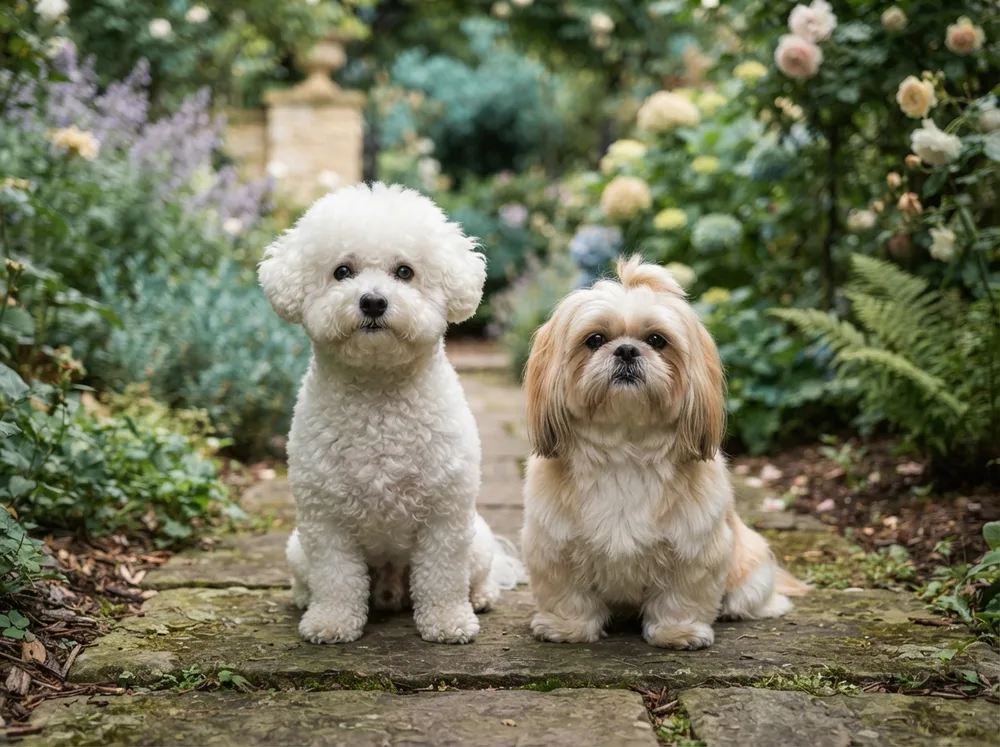
Bichon Frise or Shih Tzu: what is the honest difference?
Both are small, white, low-shedding lapdogs that are HDB-approved and need heavy grooming, so neither is a shedding or allergy shortcut. The honest split is muzzle and mood: the Bichon has a normal muzzle and a merrier, more active nature, while the flat-faced, brachycephalic Shih Tzu is calmer but more heat-sensitive in Singapore’s humidity. Choose for temperament and climate.
Bichon Frise vs Shih Tzu
Two white lapdogs, and the honest place they differ
At a glance the Bichon Frise and the Shih Tzu look like cousins: two small, white, cheerful lapdogs that a Singapore family could carry into a lift and adore for a decade and a half. Search bichon frise vs shih tzu and almost every result is an American or British breed page, a Reddit thread, or a page that quietly pivots to selling you the Shichon, the cross of the two. Useful, but none of them answers the question a local buyer is really asking, which is far simpler: in a hot, humid, HDB flat, which of these two suits my home?
We breed and place purebred Bichons, so our bias is on the table from the first line, and that is exactly why we will give you the honest split instead of a sales sheet. The two breeds overlap on the things buyers fret about, the coat, the shedding, the flat rules, and they separate on two things that matter more than people expect: the shape of the face and the shape of the temperament. Get those two right and everything else falls into place. Here is the whole picture, fairly, including the parts that point away from us.
Bichon Frise vs Shih Tzu at a glance
Here is the entire comparison on one screen, the ten axes that actually change daily life with the dog. Read the muzzle row twice, because in Singapore it carries more weight than any other line in the grid, and it is the one axis most of the overseas pages skate past.
| Trait | Bichon Frise | Shih Tzu |
|---|---|---|
| Coat | Curly double coat (powder puff), stands off the body | Long, straight double coat that drapes to the floor if grown out |
| Shedding | Low-shedding: hair sheds into the coat, not onto floors | Low-shedding too: hair sheds into the coat |
| Grooming | Heavy: brush most days, salon every 4 to 6 weeks, rounded scissoring | Heavy: brush daily, salon every 4 to 6 weeks, plus a topknot and daily face-and-eye cleaning |
| Muzzle & breathing | Normal muzzle, breathes and cools like a standard small dog | Brachycephalic (flat-faced): shorter airway, more heat and breathing sensitivity |
| Size | About 5 to 8kg, a touch taller and lighter | About 4 to 7kg, shorter but stockier |
| Temperament | Merrier, playful, eager to please, easier to train | Calmer, more laid-back, affectionate, more stubborn |
| Barking | Alert but generally quiet | Alert, and a shade more vocal |
| Health & lifespan | ~14 to 15 years; patellar luxation, skin and bladder issues | ~10 to 16 years; brachycephalic breathing, eye and dental issues |
| Price (Singapore) | $3,500–$6,000, all-in at our Balestier shop | Varies widely; local listings commonly span the low-to-mid thousands |
| HDB status | HDB-approved, item 4 of 62 | HDB-approved, also on the official list |
Coat and grooming: both a real commitment, in different shapes
Start where the two feel similar. Both wear a double coat that grows continuously rather than dropping out, so both are genuinely low-shedding: the dead hair catches in the coat instead of drifting onto your sofa and aircon. And to clear the myth both breeds attract on every listing, neither is hypoallergenic. No dog is. Allergens live in dander and saliva, not in the hairstyle, so a low-shedding coat spreads less of them but never zero. Our shedding and allergy guide tells that story straight, for either breed.
The coats part on shape and upkeep. The Bichon carries a curly double coat that stands off the body in the rounded powder-puff look, kept up with brushing most days and a salon visit every 4 to 6 weeks of rounded scissoring. The Shih Tzu grows a long, straight double coat that will sweep the floor if left long, so most pet owners keep it short, add the signature topknot to lift the hair out of those big eyes, and wipe the face folds daily. Both are heavy-grooming dogs; skip the routine for a fortnight and either one mats tight to the skin. Our Bichon grooming guide lays out the real Singapore salon cadence and prices.
Grooming reality check
- Both low-shedding, neither hypoallergenic
- Bichon: curly powder-puff coat, rounded scissor cut
- Shih Tzu: long straight coat, topknot, face folds
- Salon every 4 to 6 weeks for both breeds
- Daily brushing, or both mat tight to the skin
- Shih Tzu adds daily eye-and-face cleaning
The muzzle: the difference Singapore’s weather makes matter
This is the row we asked you to read twice. The Shih Tzu is a brachycephalic breed, which means flat-faced, built with a short muzzle and a compressed airway. It is a huge part of the charm, those big round eyes and that squashy little face, and it comes with a cost that a tropical country makes louder. A shortened airway moves less air and sheds less body heat, so brachycephalic dogs tire faster, pant harder and overheat far more easily than a normal-nosed dog.
The Bichon, by contrast, has a normal muzzle and breathes and cools like a standard small dog. This is not a knock on the Shih Tzu, which thrives in cooler homes worldwide; it is simply an honest fact about Singapore. Neither breed should be marched around at 2pm here, both are little dogs that feel our sun, but the Shih Tzu carries a built-in disadvantage in our climate that the Bichon does not. It is the single most honest reason a humidity-conscious buyer leans Bichon, and it is why the one comparison page that ranks well for this search concedes that in a tropical climate the Bichon may be the better pet.
Brachycephalic dogs and Singapore heat
A flat-faced breed like the Shih Tzu has a shorter airway that struggles to cool the body, so heat stress and breathing strain are real risks in Singapore’s humidity. Walk in the cool of early morning or evening, never at midday, keep water and air-conditioning within reach, and watch for heavy panting. The Bichon’s normal muzzle copes with the heat more comfortably, though every small dog still needs shade and care here.
Size, temperament and barking: merry versus mellow
On size, the two are close, and buyers constantly ask which is bigger. The honest answer: the Bichon is usually a touch taller and lighter on its feet at about 5 to 8kg, while the Shih Tzu is shorter but stockier and more solid in the hand at about 4 to 7kg. Neither will outgrow a flat, and both settle happily into HDB square footage, so size is rarely the axis that decides it.
Temperament is where they truly part. The Bichon is the merrier, bouncier of the two, playful well into old age, people-pleasing, and generally easier to train, complete with the famous bichon blitz zoomies to burn off the day. The Shih Tzu is the calmer, more laid-back companion, a champion lap-warmer, deeply affectionate but with a stubborn streak that rewards patience. Both are gentle, child-friendly companions when socialised young, though the Bichon’s sturdier little frame tends to shrug off boisterous toddler play a touch better than the finer-boned Shih Tzu. On barking, both are alert rather than yappy, though owners and local forums tend to find the Bichon a shade quieter of the two. Choose the energy you actually want padding around your living room.
The Bichon is the merrier, more active dog and the easier trainee; the Shih Tzu is the calmer lap companion with a stubborn streak. Pick the temperament, not the coat.
Health and lifespan: two sturdy breeds with different weak spots
Both are fundamentally sturdy little dogs that, well cared for, share your home for well over a decade. The Bichon Frise lives around 14 to 15 years, and the breed’s watch-list runs to patellar luxation (a slipping kneecap), skin allergies, bladder stones and dental disease. The Shih Tzu lives around 10 to 16 years, and its watch-list is shaped by that flat face: breathing strain, a cluster of eye problems from those prominent eyes, and crowded teeth from a short jaw. Both also pay the usual small-dog dental tax, so budget for regular tooth-brushing and the occasional scale whichever way you lean.
Neither list should scare you off; they are the ordinary price of a small companion breed, managed with a good vet, a sensible weight, dental care and the grooming cadence above. The practical takeaway for Singapore is the same one the muzzle row made: the Shih Tzu’s troubles are more weather-sensitive, and heat stress sits near the top of them, so a household that runs warm or is out in the sun a lot has one more reason to weigh the Bichon. Match either dog to a vet who knows small breeds and most of these become footnotes, not headlines.
14 to 15 yrs
Bichon lifespan
10 to 16 yrs
Shih Tzu lifespan
Both
HDB-approved
4 to 6 wks
Salon cadence
Price and HDB status: what it costs, and can your flat keep it
Good news on the rules: both breeds are HDB-approved. The Bichon Frise is item 4 on the official 62-breed list, and the Shih Tzu sits on that same approved list, so either dog is legal in a flat under the usual terms, one dog per flat, an AVS licence from NParks, and the Code of Responsible Behaviour. Our Bichon and HDB guide walks through the whole rulebook, including the fine of up to $4,000 for keeping an unapproved or extra dog.
On price, our Bichons are $3,500–$6,000, all-in, from our Balestier shop. Shih Tzu prices in Singapore vary widely by breeder and lines, with local listings commonly spanning the low-to-mid thousands, so the two bands overlap and money alone rarely settles the choice. If a family is set on a Shih Tzu, we will happily point them to an honest specialist, because we keep purebred Bichons only, white coats only. And if it is the Shichon, the Bichon and Shih Tzu cross, that has caught your eye, that is a different dog again, and one we cover fairly in our Bichon mixes guide.
The Singapore practicalities
- Both HDB-approved: the Bichon is item 4 of 62
- One dog per flat, AVS licence required
- Bichon: $3,500–$6,000 all-in at our shop
- Shih Tzu: varies, often low-to-mid thousands
- Up to $4,000 fine for an unapproved dog
- We sell purebred Bichons, white coats only
So which should you bring home?
So, the honest verdict, from the shop that only profits if you choose the Bichon. Pick the Bichon Frise if you want the merrier, more active, more trainable dog, if anyone at home is weather- or heat-conscious, and if you like the idea of a normal-muzzled companion that copes more comfortably with Singapore’s humidity. It is a wonderful first dog and a natural fit for busy, playful households that want a bit of bounce in the flat.
Pick the Shih Tzu if you want a calmer, mellower lap companion and you are ready to manage a brachycephalic breed properly: cool-hour walks, weight control, eye care and a real respect for the heat. Both are affectionate, both are low-shedding, both are HDB-legal, and neither is hypoallergenic, so let temperament and climate decide, never the myth printed on a listing. If you would like to meet a Bichon in person and feel the difference for yourself, come and see us at Balestier, or line the breed up against the others on our breed comparison hub first.
Keep exploring
Frequently asked questions
Which is better for Singapore’s climate, a Bichon Frise or a Shih Tzu?
The Bichon has the edge in our heat. The Shih Tzu is brachycephalic, or flat-faced, with a shorter airway that cools the body less efficiently, so it is more prone to heat stress in Singapore’s humidity. The Bichon’s normal muzzle handles the weather more comfortably. Both are still small dogs that need shade, water and cool-hour walks, but a humidity-conscious household has a genuine reason to lean Bichon.
Which is bigger, a Bichon Frise or a Shih Tzu?
They are close. The Bichon Frise is usually a little taller and lighter at about 5 to 8kg, while the Shih Tzu is shorter but stockier and more solid at about 4 to 7kg. In practice both are small companion dogs that fit comfortably into an HDB flat, and the size difference rarely decides the choice.
Do Bichon Frises and Shih Tzus shed, and are they hypoallergenic?
Both are low-shedding: the loose hair catches in the coat instead of falling onto your floors, which is why both need frequent grooming. Neither is hypoallergenic, though, because no dog is. Allergens come from dander and saliva rather than hair. Many allergy households still cope better with either breed thanks to less spread, but the only honest test is meeting the dog in person.
Which needs more grooming, a Bichon Frise or a Shih Tzu?
Both are heavy-grooming breeds that need brushing most days and a professional salon visit every 4 to 6 weeks. The Bichon needs rounded scissoring to hold its powder-puff shape; the Shih Tzu adds a topknot and daily cleaning around its eyes and face folds. Neither is a low-maintenance coat, so budget the time and the salon bill for either dog.
Is a Bichon Frise or a Shih Tzu easier to train?
Generally the Bichon. It is eager to please and quick to pick things up, which makes it forgiving for first-time owners. The Shih Tzu is intelligent too but more independent and stubborn, so it rewards patience and consistency. Neither is difficult, but the Bichon tends to be the smoother trainee of the two.
Are both the Bichon Frise and the Shih Tzu HDB-approved?
Yes. The Bichon Frise is item 4 on HDB’s official 62-breed list, and the Shih Tzu is on the same approved list, so both are legal in an HDB flat. The usual rules apply to either: one dog per flat, an AVS licence from NParks, and the Code of Responsible Behaviour, with a fine of up to $4,000 for keeping an unapproved or extra dog.
What is a Shichon, the Bichon and Shih Tzu mix?
A Shichon, sometimes called a Zuchon or Teddy Bear, is a cross between a Bichon Frise and a Shih Tzu, not a purebred of either. It is a different dog with its own blend of traits and its own care needs, and it is HDB-legal as a cross of two approved breeds. We keep purebred Bichons only, so we cover the crosses honestly in our Bichon mixes guide rather than sell them.
Meet your Bichon
Come say hello at Balestier
2 Balestier Road #01-701, Singapore 320002 · Weekdays 12pm–6pm · Weekends 10am–6pm. Or message us first: tell us about your home and routine, and we'll tell you honestly if a Bichon fits.
Leaning Bichon?
See which cheerful, HDB-approved Bichon puppies are in the shop right now, each one licensed and ready for flat life.
See available puppies