The honest answer
Do Bichon Frises Smell? The Honest Answer
The honest answer: a healthy, well-groomed Bichon is a low-odour, clean-smelling breed. When one does smell, the smell is a symptom, not the breed, and this guide maps every cause, from ears and a damp coat to teeth and anal glands, with the simple fix for each in our humidity.
Nelson and Kim, Curious Tails · AVS licence AS24J00046
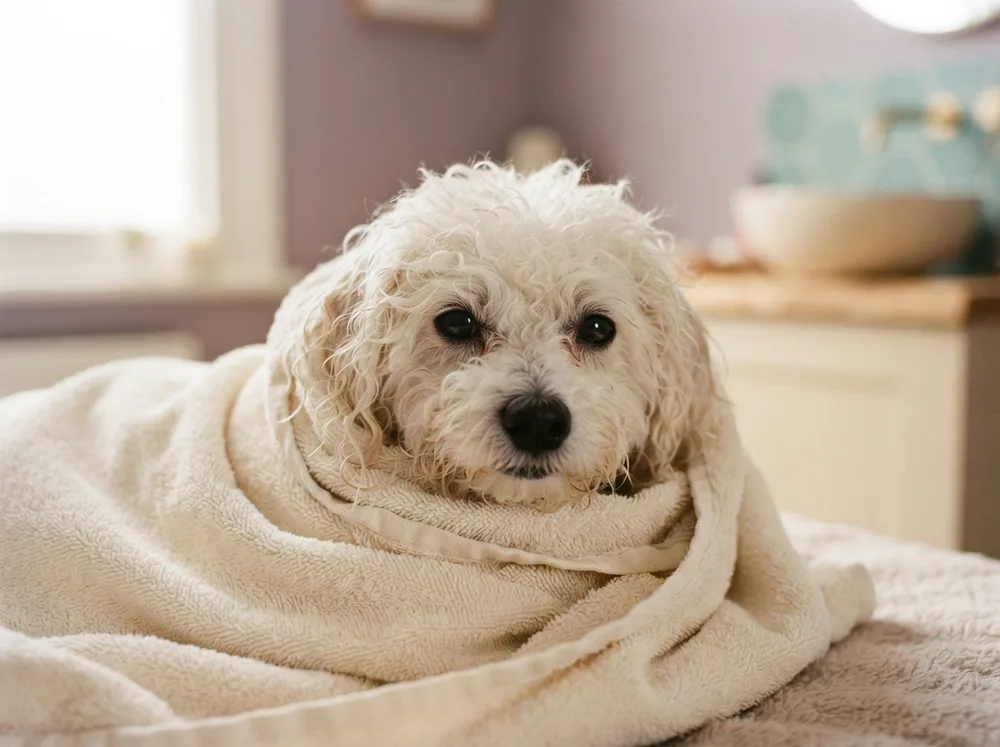
Do Bichon Frises smell?
A healthy, well-groomed Bichon Frise is a low natural odour breed with very little doggy odour. When one does smell, the smell is a symptom, not the breed, and it almost always traces to one fixable source: the ears, a damp coat or skin, the teeth, the anal glands, or Singapore’s humidity keeping a coat wet.
A clean Bichon is a groomed Bichon
So, do Bichons smell? The honest, short answer
So here is the question a lot of people quietly ask before they fall for the fluff: do Bichons smell? The honest, cheerful answer is that a healthy, well-groomed Bichon Frise is genuinely known for its low natural odour. This is a clean-smelling breed by reputation, which is one of the reasons it suits close-quarters flat life so well, and it turns up again and again on the vet and magazine lists of the least smelly dog breeds you can own. Sit beside a freshly groomed Bichon and, mostly, you will smell warm clean dog and not much else.
Part of that is the coat. The same low-shedding curls that keep hair off your sofa also mean less hair drifting around the flat and collecting doggy odour in the first place. What a Bichon is not, and here we stay honest the way we do on every page, is odour-proof or truly hypoallergenic; no dog on earth is either of those things. So a Bichon that suddenly smells is not a broken Bichon. It is a dog telling you that something small needs attention, and nine times out of ten that something is easy to find and easier to fix.
Low
natural odour when well kept
Least-smelly
lists the breed appears on
Low-shed
coat holds less odour
Not
odour-proof or hypoallergenic
A smell is a symptom: the real sources, one by one
The single most useful thing to understand about a smelly dog is that the smell is a symptom, not a personality. When a Bichon starts to pong, the coat itself is rarely the real villain. The odour is almost always coming from one specific place, and once you know the short list of usual suspects you can walk straight to the cause instead of bathing the poor dog on repeat and wondering why it keeps coming back. Here is that short list, mapped one by one, with the sign to notice and the fix that actually works.
| Source | What you notice | The fix |
|---|---|---|
| Ears | A yeasty, sour or cheesy smell from the head, head-shaking, scratching, brown gunk | Check and dry the drop ears; a vet treats an ear infection |
| Coat and skin | A musty, damp-laundry smell, worst after a bath or a rainy walk | Dry the coat fully down to the skin; treat a yeast or skin flare early |
| Teeth | Bad breath up close, tartar on the teeth, sore red gums | Brush at home, dental chews, and a vet scale when it is due |
| Anal glands | A sudden fishy smell, and scooting the bottom along the floor | A groomer or vet expresses the anal glands |
| Paws and folds | A corn-chip or sour smell from the paws or the face folds | Wash and dry paws after walks; keep folds clean and dry |
| Diet and gut | Bad wind, loose stools, a sour whiff after meals | Review the food; see a vet if it persists |
The ears and the coat: your two most likely culprits
If your Bichon smells and you only have time to check two things, check the ears and the coat. Start with the ears, because they are the number-one source of a genuinely bad smell in this breed. A Bichon’s soft drop ears fold a warm, damp, dark pocket over the ear canal, and in Singapore’s climate that is exactly the environment yeast and bacteria love. The result is ear infections, and they announce themselves with a sour or yeasty smell, head-shaking, scratching at the ear, and a brown discharge. Keep the ears dry after every bath and wet-weather walk, let your groomer manage the hair inside them, and see a vet at the first strong whiff.
The coat is the other big one, and it is the cause most owners miss. A curly Bichon coat holds water like a sponge, so a coat that is towelled off on the surface but left damp underneath will grow a musty, wet-towel smell within a day, especially in our humidity. The fix is not more baths, it is better drying: get the coat properly dry down to the skin after every wash and every rainy-season walk, never let a wet Bichon simply air-dry in an air-conditioned room, and brush out mats where damp and odour get trapped. Skin that is itchy or flaring will smell too, which is where our climate does its worst work.
The 60-second Bichon sniff-check
- Lift each ear and sniff: sour or yeasty means a vet visit
- Part the coat and smell at the skin, not the surface
- Check the muzzle and face folds for trapped food and damp
- Breathe in near the mouth: strong bad breath is dental
- A quick sniff of the bottom and paws finds the rest
- Fresh at the skin means a genuinely clean Bichon
Teeth, anal glands, paws and diet: the quieter four
Past the ears and coat sit four quieter sources, and the biggest of them is the mouth. Small breeds like the Bichon carry a full set of teeth in a little jaw, so plaque and tartar build fast, and dental disease is behind a surprising amount of what owners call a “smelly dog”. If the strongest smell is on your Bichon’s breath, the answer is dental, not another bath: brush at home, use vet-approved dental chews, and let the vet scale the teeth when they judge it is time. Next are the anal glands, two small scent sacs beside the bottom, and when they do not empty properly they throw off a sudden, unmistakable fishy smell, often with scooting along the floor, which a quick trip to the groomer or vet clears.
The last two are minor but real. Those fluffy paws collect moisture and everyday grime between the pads and can pick up a faint corn-chip or sour smell, so a wash and a proper dry after walks keeps them sweet. Diet plays a part from the inside too: a food that does not suit your Bichon can mean bad wind, loose stools and a generally sour dog, so if the smell comes with a gassy, unsettled tummy, the bowl is worth a look and a word with your vet. And a Bichon that starts to smell like urine is usually just a boy catching his own belly fur when he marks, or pee soaking into the coat on the potty pad, both fixed by a sanitary trim and a wipe; if it comes with frequent or straining toilet trips, treat it as a possible bladder issue and read our Bichon health guide before you see the vet.
The Singapore multiplier: why humidity makes it worse
Everything above is true of Bichons everywhere, but Singapore turns the dial up, and it is worth saying plainly. Our year-round warmth and humidity are precisely the conditions that yeast, bacteria and mould thrive in, so the two most common causes of a smelly Bichon, damp ears and a damp coat, flare more readily here than they would in a dry climate. A coat that would air-dry in an hour somewhere temperate can stay quietly wet against the skin for far longer in our sticky air, and a musty smell needs nothing more than that.
None of this is a reason to think twice about the breed. It is simply a reason to be a little more deliberate about drying and ear care than an owner in a cooler country would need to be. The same humidity that can turn a coat musty is also what makes itchy, yeasty skin more common here, and the two problems travel together, so our guide to keeping a Bichon’s skin healthy in Singapore’s humidity is the natural companion to this page and worth reading next.
In Singapore, a smelly Bichon is usually not a dirty Bichon. It is a damp one, and the fix is drying, not endless bathing.
The simple routine that keeps a Bichon fresh
Keeping a Bichon smelling as good as it looks is a routine, not a heroic effort. Bathe roughly every three to four weeks with a gentle dog shampoo, and more often only if your vet advises it, because over-bathing strips the coat and can make skin problems worse rather than better. The non-negotiable half of every bath is the dry: work the coat down to the skin with a towel and a dryer until there is no damp left, because a properly dried coat is the single biggest thing standing between you and a musty dog.
Around the baths, build in the small weekly habits. Check and dry the ears after every wash and wet walk, brush most days so mats never trap moisture and smell, wipe the face and paws down, and keep the teeth on a brushing routine so bad breath never gets a foothold. A professional groom every four to six weeks handles the coat, the sanitary trim and often the anal glands in one visit, and our Bichon grooming guide lays out the whole coat routine. Every Bichon we place at Curious Tails goes home with this handover written down, because a clean-smelling, well-groomed Bichon is simply the result of a few small habits kept up, not a project.
The keep-fresh routine, at a glance
- Bath every 3 to 4 weeks, no more unless a vet says so
- Always dry the coat fully down to the skin
- Dry the ears after every bath and rainy walk
- Brush most days so mats never trap odour
- Brush teeth regularly to keep bad breath away
- Professional groom every 4 to 6 weeks
When a smell means see the vet
Most Bichon smells are housekeeping, cleared by a better dry or a groomer’s visit. But smell is also one of the ways a dog tells you something is wrong, so a few kinds of odour deserve a vet rather than a bath. A sudden, strong or genuinely foul smell that appears out of nowhere usually means an active infection, most often in the ears or the skin, and it will keep returning until the underlying problem is treated. Trust your nose here: a smell that is new, strong and stubborn is a symptom, not a grooming gap.
The specific ones to act on are a yeasty or foul ear that comes with head-shaking or discharge, a raw or smelly patch of skin, strong bad breath with red or bleeding gums, a persistent fishy anal gland smell despite expressing, and any breath that turns oddly sweet or chemical, which can point to something internal. When a smell arrives alongside a dog that is also off its food, drinking oddly or low in itself, do not wait it out. A quick vet visit is always cheaper, and kinder, than a late one.
A sudden, strong smell is a vet visit, not a bath
A smell that appears suddenly and will not wash away is usually an infection asking to be treated. Book a vet, rather than reaching for the shampoo again, if you notice:
- A strong yeasty or foul ear smell with head-shaking or brown discharge
- A raw, red or smelly patch of skin that is spreading
- Persistent bad breath with red, sore or bleeding gums
- A fishy anal gland smell that keeps returning after expressing
- Any odd sweet or chemical smell, or a smell alongside an off, listless dog
Keep your Bichon fresh
Frequently asked questions
Do Bichon Frises smell?
Not much, when they are healthy and well groomed. The Bichon Frise is a low-odour, clean-smelling breed that regularly appears on lists of the least smelly dogs, and its low-shedding coat means less hair drifting around collecting smells. No dog is odour-proof or truly hypoallergenic, though, so a Bichon that does smell is showing a symptom, usually from the ears, a damp coat, the teeth or the anal glands, and each of those is fixable.
Why does my Bichon smell even after a bath?
Almost always because the coat was not dried all the way down to the skin. A curly Bichon coat holds water like a sponge, and in Singapore’s humidity a coat left damp underneath grows a musty, wet-towel smell within a day. Dry it fully with a towel and dryer after every wash, never let it air-dry in an air-conditioned room, and brush out any mats. If a clean, dry dog still smells, check the ears and the teeth next.
Why do my Bichon’s ears smell?
The Bichon’s soft drop ears fold a warm, damp, dark pocket over the ear canal, and in our humidity that is exactly where yeast and bacteria grow, so the ears are the top source of a genuinely bad smell in the breed. A sour or yeasty ear, especially with head-shaking, scratching or a brown discharge, usually means an ear infection and needs a vet, not just a clean. Drying the ears after every bath and wet walk prevents most of it.
Do Bichons smell like urine?
Sometimes, and it is usually simple. A boy can catch his own belly fur when he marks, or pee can soak into the coat on the potty pad, both solved by a sanitary trim and a wipe-down. A true, persistent urine smell that comes with frequent or straining toilet trips is different and can point to a urinary infection or bladder stones, which the breed is a little prone to, so that version is worth a vet visit rather than a bath.
Are Bichon Frises one of the least smelly dog breeds, and are they hypoallergenic?
Yes to the first, with an honest no to the myth in the second. The Bichon genuinely is one of the least smelly dog breeds and is often called allergy-friendlier because it is low-shedding, part of why it suits close HDB living. But no dog is truly hypoallergenic or odour-free; allergens and some odour come from skin, saliva and urine, not just shed hair. A groomed, dried, healthy Bichon is about as low-odour as dogs get, which is the honest version.
When is my Bichon’s smell a reason to see the vet?
When the smell is sudden, strong and will not wash away, because that usually means an active infection rather than a grooming gap. See a vet for a yeasty or foul ear with head-shaking, a raw or smelly patch of skin, strong bad breath with red gums, a fishy anal-gland smell that keeps returning, or any odd sweet or chemical smell, particularly if your Bichon is also off its food or low in itself. A quick visit beats a late one every time.
Meet your Bichon
Come say hello at Balestier
2 Balestier Road #01-701, Singapore 320002 · Weekdays 12pm–6pm · Weekends 10am–6pm. Or message us first: tell us about your home and routine, and we'll tell you honestly if a Bichon fits.
Meet a fresh, well-started puppy
Every Bichon we place is health-checked, groomed and set up with a keep-fresh routine, from an AVS-licensed shop. See who is looking for a home right now.
See available puppies