White-coat care, told straight
Tear Stains on a White Coat: What Works
The reddish-brown marks under a Bichon’s eyes are porphyrins in the tears meeting a white coat, not a sign you have done anything wrong. Here is the honest picture: the causes worth ruling out with your vet, a two-minute daily routine that keeps them faint, and the products to leave on the shelf.
Nelson and Kim, Curious Tails · AVS licence AS24J00046
What causes Bichon tear stains, and can you get rid of them?
Bichon tear stains are the reddish-brown marks under the eyes, where porphyrins, the iron-rich pigments in tears, meet a bright white coat. They are usually managed rather than cured: rule out medical causes with a vet, then keep the area clean, dry and trimmed. A daily wipe beats any miracle tear stain remover.
The reddish-brown stain, told straight
What a tear stain actually is
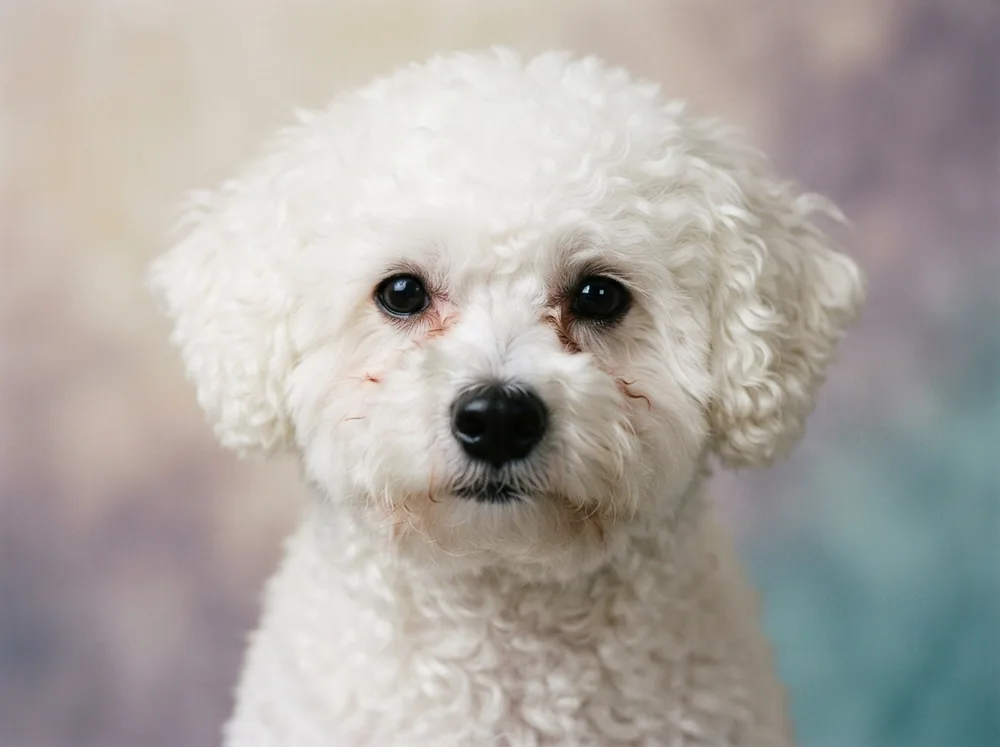
Let’s name the thing first. Tear stains are the reddish-brown tracks that run from the inner corner of a Bichon’s eyes down the fur, and on a bright white coat they show up like ink on paper. The colour comes from porphyrins, iron-rich pigments the body makes when it breaks down old red blood cells and then passes out in tears and saliva. Every dog produces them. A Bichon just happens to wear them where the whole world can see. The medical word for the overflow of tears behind it is epiphora, and the honest headline is this: for most Bichons, staining is a grooming matter to manage, not a disease to fear.
Because the pigment is made inside your dog, there is no wipe, powder or pill that switches it off for good. You cannot bleach biology away, and any product that promises otherwise is selling you a story. What you can do, and what this guide is really about, is keep the face clean and dry so the porphyrins have less time and moisture to set, then rule out the handful of medical causes that make the tearing worse than it needs to be. Porphyrins also darken in daylight, which is why a stain that looks faint indoors can read rust-red by the afternoon.
Tear stains at a glance
- Reddish-brown pigment called porphyrins
- Made as the body breaks down red blood cells
- Passed out in tears, so it shows on white fur
- Epiphora just means overflowing tears
- Usually managed, never permanently cured
- A sudden change deserves a vet visit
Why a white Bichon shows every tear
If you have ever felt quietly judged by your Bichon’s marked face, let this paragraph lift it. Tear staining is most visible on white-coated breeds for the plainest reason of all: the pigment is reddish-brown and the coat is white, so there is nowhere for it to hide. The very same porphyrins on a black Schnauzer or a red Dachshund are simply invisible. A Maltese, a Westie, a cream Poodle, a Coton, all of them wear the mark exactly the way your Bichon does. It is a contrast problem as much as a tear problem, and contrast is not something you did wrong.
There is a little anatomy in it too. Many small companion breeds carry big, round, expressive eyes in a compact face, and some have shallow eye sockets or fine hair that curls in toward the eye, so tears spill over the lid instead of draining away down the nose. Add the Bichon’s habit of growing hair right up to the eye, and you have a face almost designed to catch and hold moisture. None of this makes the breed unhealthy or you neglectful. It simply means the Bichon’s cloud-white charm and its tear stains grow from the same lovely piece of design.
The same porphyrins on a black dog are invisible. On your white Bichon they simply have nowhere to hide. It is a contrast problem as much as a tear problem.
The causes worth ruling out, vet first
Here is where the honest version of this topic parts company with the miracle-cure crowd. Before you buy a single product, it is worth ruling out the reasons a Bichon might be tearing more than usual, because some of them are medical and none of them are fixed by a wipe. Most staining is harmless plumbing and pigment. But a Bichon whose tearing suddenly ramps up, or who is squinting, pawing or holding an eye half shut, needs a vet, not a shopping trip. It is the same message our health and lifespan guide gives: a vet should confirm the staining is plumbing, not a scratch or an infection.
A few of these causes earn a Singapore footnote. Our year-round humidity keeps a curly face damp, and warm, wet fur is exactly where yeast sets up home and turns a pale stain brown and faintly smelly. Water quality and diet play smaller, fuzzier roles: minerals in tap water and cheap fillers in food are often blamed, and while the evidence is genuinely thin, moving to filtered water and a clean, complete diet is cheap, safe and occasionally helps. Treat those two as gentle experiments rather than cures, and start with the vet-checkable causes in the table below.
| Cause | What is happening | Who sorts it |
|---|---|---|
| Blocked or narrow tear ducts | Tears cannot drain down the nose, so they overflow onto the face | A vet checks the duct; some can be flushed |
| Shallow eye sockets and eye shape | Prominent eyes and lid shape let tears spill over the rim | A vet assesses it; usually just managed |
| Teething puppies | Heavy teething tearing that often fades by adulthood | Time and a daily wipe; watch it settle |
| Allergies and irritants | Pollen, dust, smoke or food set off allergies and watery eyes | A vet finds the trigger; you reduce it |
| Ingrown lashes or hair in the eye | Fine hairs or lashes rub the eye and drive extra tearing | A vet or groomer; never tweeze near the eye yourself |
| Yeast and trapped moisture | Damp fur grows yeast, deepening the stain in our humidity | You keep the area dry; a vet treats a true infection |
| Water and diet | Water quality and diet get blamed, though the evidence is mixed | Try filtered water and a clean diet, no miracle claims |
When a stain means see the vet, not the grooming shelf
Most of the time, tear staining is a cosmetic footnote on an otherwise happy dog, and the daily routine further down is all it ever needs. But staining sits right next to the eye, the one place on a dog where waiting a week can cost real damage, so it pays to know the line between a grooming job and a clinic visit. The rule of thumb is change. A stain that has been the same faint pink for months is a management task. A stain that appears or worsens quickly, or arrives with any sign that the eye itself is unhappy, is a reason to phone the vet the same day.
See a vet the same day if you notice
Tear staining sits right beside the eye, so treat any of these as a clinic visit rather than a grooming fix:
- A sudden increase in tearing, or staining that darkens fast
- Squinting, pawing at the eye, or holding it half shut
- Thick, green or yellow discharge instead of clear tears
- A cloudy eye, redness, swelling or obvious discomfort
- Any staining paired with a smell, which often signals yeast or infection
A daily routine that keeps stains faint
The unglamorous truth is that the thing that works best costs almost nothing and takes about two minutes. Once your vet has ruled out the medical causes, the whole job is daily cleaning: keeping the eye area clean and, above all, dry, so the porphyrins and any yeast have less to feed on. Wipe gently under each eye once or twice a day with a soft cloth or a damp cotton pad and warm water, working from the inner corner outward, then, and this is the step almost everyone skips, dry the area properly afterwards. A face left wet is what turns a faint mark into a set-in stain.
Around that daily wipe sit two more habits. Trim the hair around the eyes short so tears wick away instead of soaking in, a job for your groomer every four to six weeks rather than your own scissors near a wriggling dog. And keep your expectations honest about any tear stain remover you buy. The gentle, vet-safe wipes and saline or colloidal-silver cleaners can lift surface staining and keep the area fresh, but no bottle bleaches biology into submission. Hair that is already stained grows out over weeks, and your daily habit is simply what keeps the new growth pale. Our Bichon grooming guide covers the coat side in full.
Your two-minute daily routine
- Wipe under each eye once or twice a day
- Use warm water, saline or a vet-safe wipe
- Work from the inner corner outward, gently
- Dry the fur thoroughly every single time
- Comb out corner debris before it hardens
- Groomer trims the eye-area hair every 4 to 6 weeks
What to keep well away from your Bichon’s eyes
For every honest tip about tear stains, the internet offers three more that range from useless to genuinely risky, and a few of them are repeated so often they start to sound safe. They are not. The eye is delicate, your Bichon cannot tell you the moment something stings, and the guiding rule is simple: nothing goes near the eye that you would not put near your own without a doctor’s say-so. The fastest-sounding fixes are almost always the ones to walk past.
Two deserve a special warning because they promise the quickest results. Household bleaching agents like hydrogen peroxide, along with human tear-stain and makeup removers, can scald the cornea if they stray, and near a squirming dog’s eye they stray easily. And oral tear-stain products built on antibiotics, the tylosin powders sold for years under names like Angel Eyes, treat a cosmetic problem with a medicine that should be a vet’s call, not a shelf purchase; used casually they feed antibiotic resistance and can upset a young dog’s gut. If a product’s pitch sounds like a miracle, read the label twice, and when in doubt, ask your vet before your Bichon.
Leave these off your Bichon’s face
- Hydrogen peroxide, bleach or any harsh chemical near the eye
- Human tear-stain removers, makeup remover or contact-lens solution
- Oral antibiotic powders (tylosin, Angel-Eyes-style) without a vet
- Unproven supplements sold as a permanent tear-stain cure
- Scrubbing hard, or trimming so close that you risk the eye
The full routine lives on our Maltese guide
One last thing, and it is a friendly hand-off. The single deepest, most-tested tear-stain routine in our whole family of breed guides does not live on this page; it lives on our sister site, because the Maltese is the other great white-coated companion that wears every porphyrin the way a Bichon does, and its owners have turned stain management into something close to a craft. Everything on this page holds true for both breeds, so rather than repeat a thinner version here, we would rather send you to the full playbook.
For the step-by-step version, with the product comparisons, the corner-of-the-eye technique in close detail and the week-by-week routine, read the complete tear-stain guide on maltese.sg. Then come back to us for everything Bichon. Our health and lifespan guide sets tear staining inside the breed’s whole watch-list, and if you are still choosing a puppy, every Bichon we place at Curious Tails leaves with its coat and eye-area care already started. We are an AVS-licensed shop, licence AS24J00046, and we would far rather teach you the two-minute habit than sell you a miracle in a bottle.
Keep the white coat bright
Frequently asked questions
Why does my Bichon Frise get tear stains?
The reddish-brown colour comes from porphyrins, iron-rich pigments your dog makes when it breaks down red blood cells and then passes out in its tears. Every dog produces them, but a Bichon is white, so they show. On top of that, big round eyes, shallow eye sockets and hair growing close to the eye let tears overflow onto the face rather than draining down the nose, and Singapore’s humidity keeps that fur damp. It is mostly biology and contrast, not anything you did wrong.
Are tear stains on a Bichon a health problem or just cosmetic?
Usually just cosmetic: a stain that has stayed the same faint pink for months is a grooming task, not an illness. What matters is change. A sudden increase in tearing, squinting, pawing at the eye, thick or coloured discharge, redness, or a smell means you should see a vet the same day rather than reach for a wipe, so the staining can be confirmed as harmless plumbing and not a scratch, a blocked duct or an infection.
How do I clean my Bichon’s tear stains at home?
Wipe gently under each eye once or twice a day with warm water, saline or a vet-safe tear-stain wipe, working from the inner corner outward, then dry the fur thoroughly, because a wet face is what sets a stain. Comb out any hardened debris in the corner, and have your groomer keep the hair around the eyes trimmed short every four to six weeks so tears wick away instead of soaking in.
What is the best tear stain remover for a Bichon?
Honestly, no bottle beats the daily wipe-and-dry habit. Gentle, vet-safe wipes and saline or colloidal-silver cleaners can lift surface staining and keep the area fresh, but because the pigment is made inside your dog, nothing removes it permanently; already-stained hair simply grows out over weeks. Choose a mild, fragrance-free product made for the eye area, and treat any remover as a helper to good hygiene, not a cure.
Is hydrogen peroxide or an Angel Eyes-type product safe for tear stains?
Be very careful with both. Hydrogen peroxide, bleach and human tear-stain or makeup removers can scald the cornea if they stray near the eye, so they are best kept away from a Bichon’s face entirely. Oral tear-stain powders built on antibiotics such as tylosin, sold under names like Angel Eyes, treat a cosmetic issue with a medicine that should be a vet’s decision; used casually they can upset the gut and contribute to antibiotic resistance. Ask your vet first.
Do puppy tear stains go away, and does Singapore’s humidity make them worse?
Puppies often tear heavily while teething, and that staining frequently fades as the adult teeth settle in, so a stained Bichon puppy is not a red flag on its own. Singapore’s humidity does not help, because it keeps a curly face damp and warm fur grows the yeast that deepens a stain. The answer is the same either way: keep the eye area clean and, above all, dry, and see a vet for any sudden or worsening change.
Meet your Bichon
Come say hello at Balestier
2 Balestier Road #01-701, Singapore 320002 · Weekdays 12pm–6pm · Weekends 10am–6pm. Or message us first: tell us about your home and routine, and we'll tell you honestly if a Bichon fits.
Meet a well-started white Bichon
Every Bichon we place is purebred, powder-puff white and HDB-approved, with the coat and eye-area care already begun. See who is looking for a home right now.
See available puppies