The honest feeding guide
Feeding a Bichon Frise in Singapore
How much to put in the bowl, what to look for on the label, and the quiet ways a good diet supports a Bichon’s skin, teeth, tear stains and bladder, all in a Singapore context with a real monthly budget.
Nelson and Kim, Curious Tails · AVS licence AS24J00046
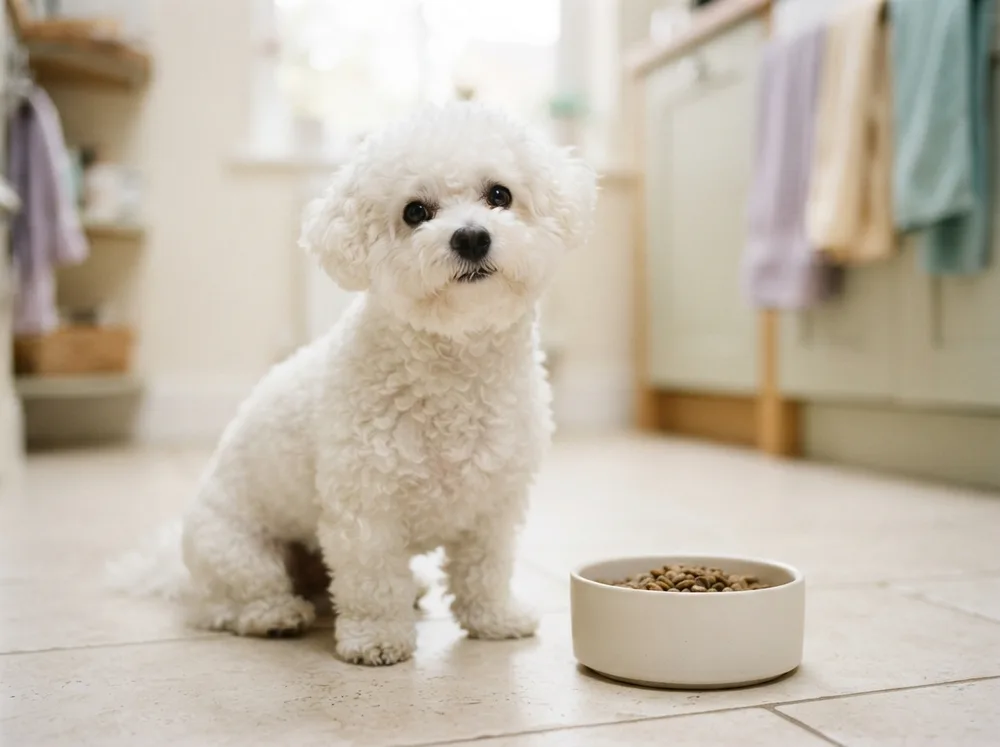
How much and what should I feed a Bichon Frise?
A grown Bichon Frise weighs 5 to 8kg and eats roughly 80 to 140g of a complete and balanced small breed food a day, split into two meals and adjusted to body condition. Choose a named protein, match the life stage, and note that diet supports skin, teeth and bladder health too. Budget $60 to $90 a month in Singapore.
Feeding the small white cloud
How much to feed a Bichon Frise, by weight
Start with the question everyone actually wants answered: how much? A grown Bichon Frise is a small breed of roughly 5 to 8kg, and most eat somewhere between 80 and 140 grams of a good dry food a day, split into two meals. That is a starting point, not a rule, because every food packs a different number of calories into a gram. The honest method is to follow the feeding chart on the bag for your dog’s weight, start at the lower end, and let your dog’s body tell you whether you have it right.
The single most important habit in bichon frise food is watching body condition rather than the bowl. Run your hands over your dog’s ribs: you should feel them easily under a thin layer, like the back of your hand, and see a tuck at the waist from above. If the ribs are buried, trim the portion by ten percent and add a walk. Small dogs hide weight under all that coat, and a fluffy Bichon can drift into obesity long before it looks fat, which is why the portion size in the table below is a place to begin, not a target to hit.
The grams below assume a typical dry food near 3.6 calories per gram, so check your own bag and weigh each meal rather than scooping. Puppies and active dogs need more; sterilised adults and quiet seniors, less.
| Adult weight | Rough daily calories | Typical dry food per day | Meals |
|---|---|---|---|
| 4 kg | 250 to 300 kcal | 65 to 80 g | 2 |
| 5 kg | 290 to 350 kcal | 80 to 95 g | 2 |
| 6 kg | 330 to 400 kcal | 90 to 115 g | 2 |
| 7 kg | 370 to 450 kcal | 105 to 130 g | 2 |
| 8 kg | 410 to 500 kcal | 115 to 140 g | 2 |
Puppy, adult and senior: feeding by life stage
A Bichon eats differently at each end of its life, and matching the life stage matters more than any brand on the shelf. A puppy is building a body, so it needs a puppy food, or an all-life-stages food, richer in calories and protein and fed little and often: three to four small meals a day up to about four months, then three, then down to two by around six months. A bowl left out all day is the fast route to a fussy eater and a chubby dog, so keep to set mealtimes from the start.
Most Bichons move onto an adult food somewhere between ten and twelve months, once they are near their full small breed size. In the middle years the plan is simple: a complete and balanced adult food, two meals a day, portions tuned to body condition. Around eleven or twelve years many owners shift to a senior recipe, really just an adult food for a quieter dog, often with a little less fat and some support for ageing joints. Each of these steps needs to be gradual.
Whenever you change food, whether a life-stage step or simply a new bag, do it as a transition over about seven days. Days one and two, mix roughly a quarter new food with three-quarters old; days three and four, half and half; days five and six, three-quarters new; day seven, all new. A Bichon has a small digestive system that a sudden swap upsets easily, and a slow change lets the gut catch up with no loose stools. When you collect a puppy from us it goes home already on a food and a feeding schedule, so you can keep everything steady for a fortnight and change only after that.
Feeding by age, at a glance
- Puppy to 4 months: 3 to 4 small meals a day
- 4 to 6 months: 3 meals on a set schedule
- 6 to 12 months: settle to 2 meals a day
- Switch to adult food around 10 to 12 months
- Senior recipe from about 11 to 12 years
- Change any food slowly over a 7-day transition
What actually matters on the label
Ignore the front of the bag, where the marketing lives, and turn it over. The first thing to find is a named protein high on the ingredient list: "deboned chicken", "lamb" or "salmon", not a vague "meat meal" or "animal derivatives". A specific, named meat near the top means the recipe is built around real animal protein, which is what a small dog actually runs on. Fish-based recipes carry a quiet bonus, because the omega-3 fatty acids in fish oil are the same fats that support calm skin and a bright coat.
The second thing to find is the line that proves the food is a whole diet rather than a topper or a treat. In most markets that is an AAFCO statement reading that the food is "complete and balanced" for a named life stage: "growth", "maintenance" or "all life stages". That single sentence is worth more than every adjective on the front, and it is the first thing we tell any new owner to check.
Beyond those two, the useful test is the one the WSAVA nutrition guidelines suggest: does the maker employ a qualified nutritionist, run real feeding trials, and happily tell you who to call with a question? A company that answers those plainly has earned more trust than one selling a breed’s photo on the pack. Notice we have named no brand, and that is deliberate: the search results are full of "best Bichon food" lists, but the grain-free flash and the price tag tell you far less than the two lines on the back.
There is no one best bag. Read the back for a named protein and an AAFCO complete-and-balanced line, then let your dog’s coat, stools and waistline tell you whether you chose well.
Feeding around the Bichon’s health quirks
This is where feeding a Bichon stops being generic and turns breed-specific, because four of the conditions this breed is known for have a dietary angle. None of it is a cure, and a therapeutic diet is your vet’s decision, but knowing the levers helps. Start with the skin. The Bichon’s top niggle is itchy skin, and a minority of cases are driven by food allergies to a protein the dog has eaten for years, commonly chicken, beef, dairy, soy or wheat. The only real test is a vet-guided elimination trial: eight to twelve weeks on a single novel protein with no other treats, then a rechallenge. That is not the same as buying a "hypoallergenic" bag off the shelf, and no food makes a dog non-allergenic. Our health guide and shedding and allergy page tell that story straight.
The second lever is water, and it matters most for bladder stones, which the Bichon is genuinely prone to. The best dietary defence is dilute urine, which means getting more water into the dog: some wet food, warm water added to kibble, and fresh water in more than one bowl. If your Bichon has actually formed stones, some types are dissolved or held off by a prescription urinary diet, but that is a vet’s call and a prescription, never a guess off the pet-shop shelf. The same water habit quietly helps tear staining too: staining is mostly plumbing, the overflow from tight tear ducts, but good hydration and a clean diet give you the best odds, and the deeper routine lives in our tear stain guide.
The last lever is the one most owners get backwards: teeth. It is a myth that dry kibble scrubs a dog’s teeth clean; most kibble shatters on the first bite and does almost nothing at the gumline, which is where dental disease, the small breed’s quiet epidemic, begins. Diet helps only at the edges, through dental chews and diets that carry a recognised veterinary seal; it never replaces the real tool, a toothbrush. The full routine is in our dental care routine, and that daily minute is the highest-value thing you do for your Bichon’s mouth.
Diet levers, issue by issue
- Itchy skin: a vet-guided elimination trial, not a hype label
- Coat: omega-3 fatty acids from fish oil help skin and shine
- Bladder stones: more water and wet food; a prescription diet if stones form
- Tear staining: hydration and a clean diet help, but plumbing rules
- Teeth: chews help a little, a toothbrush does the real work
- Any medical diet is a vet prescription, not a shelf guess
Treats, table scraps and the foods that can harm
Treats are part of a happy dog’s life and a huge help in training, with one rule of thumb: keep all treats and extras to no more than about ten percent of the day’s calories, and take that ten percent off the main meals. For a small breed those calories vanish fast, so break treats into tiny pieces. Plenty of good treats are already in your kitchen: a little plain cooked chicken, a few blueberries, a slice of carrot or cucumber, or a piece of plain cooked egg, which many Bichons adore.
The more important list is the one that can hurt. Some everyday human foods are genuinely dangerous to dogs, and a Bichon is small enough that even a little goes a long way. Keep the list below where the whole household can see it, because most poisonings are an accident, a dropped square of chocolate or a handbag left open, not a deliberate feed.
Toxic foods: never feed these to a Bichon
These common foods can poison a dog, and a small breed reaches a dangerous dose from a tiny amount. Keep them well out of reach, and call a vet at once if your Bichon swallows any:
- Chocolate, coffee and anything with caffeine
- Grapes and raisins, which can trigger kidney failure
- Xylitol, the sweetener in sugar-free gum, sweets and some peanut butters
- Onion, garlic, leeks and chives, raw or cooked
- Macadamia nuts, alcohol and raw bread dough
- Cooked bones, which splinter, and very fatty scraps
A simple Singapore feeding plan, and what it costs
Put it together and a Bichon’s week is refreshingly simple. Two measured meals a day, morning and evening, of a complete and balanced food matched to its life stage, weighed on a kitchen scale, with fresh water always down and the odd healthy treat inside that ten-percent budget. Dry, wet, gently cooked fresh or a mix is up to you and your dog; the right answer is the one your Bichon thrives on and you can sustain for years.
On cost, the good news is that a small dog is cheap to feed. Feeding a 5 to 8kg Bichon a solid mainstream food runs roughly $60 to $90 a month in Singapore, a little less on a good dry food, a little more on premium fresh or wet. Local shops and online stores stock plenty of small breed formulas at every price point. That food budget sits well below the grooming bill, which is the real headline cost of this breed; we lay out the whole lifetime picture on our price guide and in the full cost breakdown.
One honest word on the fashionable formats. A raw diet is popular and some dogs do well on it, but raw meat carries a real bacterial risk that matters more in Singapore’s heat and humidity, where a bowl left out spoils quickly, so it demands careful handling and is not our default advice for a first-time owner. A home-cooked diet can be excellent, but it is only complete and balanced when a vet or nutritionist writes the recipe; a well-meaning chicken-and-rice bowl is usually short on minerals. When in doubt, a reputable commercial food takes the guesswork out.
5–8 kg
Adult weight this plan is built for
2 meals
Morning and evening, weighed not scooped
$60–$90
Rough monthly food cost in Singapore
2 bowls
Fresh water always down, for bladder health
What our puppies eat, and the switch home
Because we place these dogs every week, buyers ask what our puppies eat before almost anything else. Every Bichon leaves 2 Balestier Road #01-701 already weaned onto a quality puppy food and a settled feeding schedule, and the starter kit that goes home with it includes the first supply, so day one changes nothing under the dog’s nose. Keep that food and routine steady for a week or two, then transition over seven days only if you choose to change.
If you are weighing what to feed, message us at +65 8220 6408 and we will tell you exactly what your puppy is on and why, with no pressure to buy anything from us. General nutrition guidance like this page is a strong start for a healthy dog, but it is not a substitute for your vet, who is the right person for any medical or therapeutic diet. Feed for body condition, keep the water fresh, and you have handled the biggest daily decision in your Bichon’s long and cheerful life.
The honest bottom line
Feed a complete and balanced food matched to your Bichon’s age, weigh two meals a day to body condition, keep fresh water down, skip the toxic foods, and see your vet for any medical diet. Do that and you are ahead of most owners, and well ahead of every brochure that just told you to buy their bag.
Keep exploring
Frequently asked questions
How much should I feed a Bichon Frise, and how often?
A grown Bichon of about 5 to 8kg usually eats between 80 and 140 grams of a good dry food a day, split into two meals, morning and evening. Because every food has a different calorie density, treat that as a starting point: follow the feeding chart on your own bag for your dog’s weight, weigh the food on a kitchen scale, and then adjust to body condition. You should be able to feel the ribs easily and see a waist. Puppies eat more often, three to four small meals a day, dropping to two by around six months.
What should I look for when choosing a Bichon Frise food?
Turn the bag over and check two things. First, a named protein such as deboned chicken, lamb or salmon high on the ingredient list, rather than a vague "meat meal". Second, an AAFCO statement that the food is complete and balanced for the right life stage. Those two lines matter far more than the brand, the breed photo or a grain-free flash on the front. A fish-based recipe is a nice bonus for this breed, since the omega-3 fatty acids support skin and coat.
What is the best puppy food for a Bichon Frise, and when do I switch to adult food?
The best puppy food is any complete and balanced formula labelled for growth or all life stages, from a maker that uses a qualified nutritionist and runs feeding trials. Feed it three to four small meals a day early on, settling to two by around six months. Most Bichons move onto an adult food between ten and twelve months, once they are near full size. Make the switch gradually over about seven days to avoid an upset stomach.
Should a Bichon Frise eat grain-free food?
Not necessarily. Grain-free became fashionable, but grains are not a common allergen for dogs, and vets have raised questions about some grain-free diets, so it is not automatically the healthier choice. Unless your vet has diagnosed a specific grain issue, a good food with wholesome grains is perfectly fine. Judge any food by its named protein and its complete-and-balanced statement, not by whether it says grain-free on the front.
What human foods are toxic to a Bichon Frise?
Never feed chocolate, coffee or caffeine; grapes and raisins, which can cause kidney failure; xylitol, the sweetener in sugar-free gum, sweets and some peanut butters; onion, garlic, leeks and chives; macadamia nuts; alcohol; and raw bread dough. Cooked bones and very fatty scraps are also risky. A Bichon is small, so a dangerous dose is tiny. If your dog swallows any of these, call a vet straight away rather than waiting to see what happens.
Can the right food help my Bichon’s itchy skin or bladder stones?
It can help, within limits. Itchy skin is only sometimes a food allergy; the honest test is a vet-guided elimination trial on a single novel protein for eight to twelve weeks, not a hypoallergenic label off the shelf. For bladder stones, the biggest dietary lever is water: feed some wet food, add water to kibble and keep fresh water in two bowls. Some stones are managed with a prescription urinary diet, but that is a medical diet your vet prescribes, not something to choose yourself.
How much does it cost to feed a Bichon Frise in Singapore each month?
A small dog is cheap to feed. Budget roughly $60 to $90 a month for a 5 to 8kg Bichon on a solid mainstream food, a little less on a good dry food and a little more on premium fresh or wet options. That sits well below the grooming bill, which is the real headline cost of the breed. Our price guide and cost breakdown set out the full lifetime picture, food included.
Meet your Bichon
Come say hello at Balestier
2 Balestier Road #01-701, Singapore 320002 · Weekdays 12pm–6pm · Weekends 10am–6pm. Or message us first: tell us about your home and routine, and we'll tell you honestly if a Bichon fits.
Ready to meet one?
Every Bichon in our shop goes home on a settled diet, with the first food supply in the starter kit and a health check done. See who is looking for a home right now.
See available puppies